
Section 11. Key water developments in the World
11.1. Africa
The Grand Ethiopian Renaissance Dam on the Nile River on the border with Sudan. In 2024, the situation around the dam escalated. Egypt has submitted a formal letter to the UNSC, condemning Ethiopia’s current policy as a violation of international law and a breach of the 2015 Agreement signed between Egypt, Sudan, and Ethiopia. The negotiations, which resumed in August 2023, ended inconclusively. As of 2024, the trilateral talks have yet to yield a resolution that satisfies all parties. The leaders of Egypt and Sudan continue to insist on their historical rights to Nile waters and seek an agreement that ensures the GERD’s operation does not imperil their nations’ access to this critical resource. The outcome of this dispute will have far-reaching implications for regional stability and international norms governing transboundary water resources in an era marked by climate change and increasing water scarcity. Currently, 42 billion m3 of water have already been accumulated in the dam’s reservoir, and two turbines are in operation. Once completed, the volume of the reservoir will be 74 billion m3 and the surface area – 246 km2. The output of the HPP will reach 5,150 MW. It is planned to create about 70 artificial islands on the reservoir to develop tourism.
Work is progressing to formalize the joint management of the Senegal-Mauritanian Aquifer Basin. As parties to the Water Convention, Gambia, Guinea-Bissau, and Senegal are receiving UNECE support to strengthen cooperation with Mauritania. The goal is to establish a permanent mechanism—comprising both legal and institutional frameworks—to ensure the sustainable, collaborative governance of this shared transboundary resource.
Zimbabwe will boost food security with irrigation projects. It anticipates over 1.8 million tons of maize from 350,000 ha of irrigated land this summer. Winter crops should add 1.4 million tons. Key projects include: (1) operating existing dams like Tugwi Mukosi (40,000 ha of irrigation area); (2) building new dams to add 39,000 ha of irrigation; (3) establishing irrigated green belts along rivers for 50,000+ ha of year-round farming. With better water management, up to 2.2 million ha could be developed.
South Africa. South Africa’s Water Reuse Program, a U.S. $ 1.5 billion project developed in partnership with the GCF, Development Bank of Southern Africa (DBSA) and others seeks to overhaul the country’s wastewater system and reuse treated wastewater as a response to increasing demand for the resource. South Africa is one of the most vulnerable regions in the world to climate change, and many of the impacts are felt in the water sector. The program envisages: (1) project preparation support to help municipal water reuse project to advance to a bankable stage; (2) capacity building and information communication; (3) addressing market constraints and catalyzing climate related water reuse investments, thus creating a new asset class around reuse infrastructure in South Africa.
South Africa and Zimbabwe entered a landmark water sharing deal. According to the agreement, the Beitbridge Water Treatment Plant will annually transfer 15 million m3 of treated water from Zimbabwe to Musina in South Africa. The Plant capacity is 35 million m3/annum, with only 10% of the capacity used for Beitbridge.
The African Development Bank (AfDB) has announced its intention to commence investment in city wide inclusive sanitation in Kenya, Ghana, Zambia and Sierra Leone. The initial grant is expected to have a value of around $ 6 million, and it falls within the updated Africa Urban Sanitation Investment Initiative of the bank’s African Water Facility. An addition, AfDB and Lake Chad Basin Commission signed a MoU to rehabilitate the Lake Chad basin.
Limpopo River basin. The 1st Joint Basin Survey (JBS) for the Limpopo River Basin was an important step in the development of cross-border cooperation. The survey is expected to generate data in support of decision making on water quality, river health and environmental flow in the Limpopo Basin, which is shared by four countries namely Botswana, Mozambique, South Africa, and Zimbabwe. The JBS is the latest development in a series of high-profile events that have taken place in 2024 to mark milestones in transboundary cooperation on the Limpopo. In March, a meeting was held in Musina, South Africa, where ministers from the LRB Member-States signed an endorsement to the Amendment of the LIMCOM Agreement to formalize the establishment of the Council of Ministers as the LIMCOM’s main policy and decision-making body on transboundary water development and management. In May, Member-States met in Pretoria to agree on a set of transboundary priorities for the basin, which will guide transboundary and national investments in the basin in the coming years. This took the form of a basin-wide consultative workshop on Transboundary Diagnostic Analysis (TDA), a technical process through which the key elements of a Strategic Action Plan (SAP) for the basin can be developed.
Tanzania is to launch a $15 billion water investment program that will use innovative local finance. The funds will be allocated for four priorities: 40% will go to social investments, 8% to institution-building and skills development, 32% to economic development and water management, and 20% to improved climate resilience and environmental sustainability. As part of the program, the Tanga Urban Water Supply and Sanitation Authority announced the issue of East Africa’s first green bonds to support the expansion of services and infrastructure.
Floods in West and Central Africa. In 2024, heavy rainfall impacted several countries across West and Central Africa, including Nigeria, Chad, Niger, Mali, Guinea, Cameroon and Ghana. At least 1,500 were killed and more than a million were displaced. Maphlix Trust Ghana Limited Farms, the largest vegetable producer in West Africa, was under water, which led to the destruction of more than $2 million worth of damage to crops and infrastructure, including 27 greenhouses, fertigation tanks and administrative buildings. Heavy flooding in Nigeria’s Borno state led to a prison wall collapse.
11.2. Asia
Afghanistan
Economy. After two consecutive years of sharp economic contraction, the Afghan economy experienced a modest recovery. In 2023-2024, GDP grew by 2.7% mainly due to private consumption, as well as positive dynamics in agriculture, industry and the service sector. At the same time, the industrial sector slightly outperformed the others. However, the recovery has been modest, regaining only 10% of the losses from the last two years, and is lagging the regional average and neighboring countries. At this current pace, it could take over a decade for the economy to return to pre-Taliban levels.
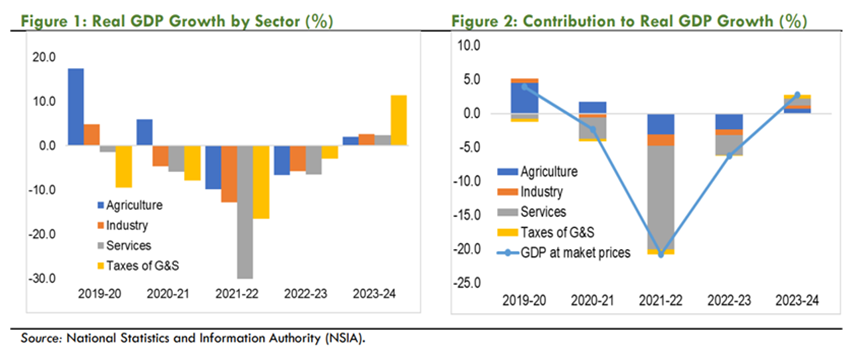
Source: National Statistics and Information Authority
Agriculture, which accounts for 36% of GDP, grew by 2.1% in 2023-24, recovering from a 6.6% contraction the previous year. This recovery was driven by favorable weather conditions, including abundant precipitation in spring 2023, and crop diversification following the opium ban.
The industrial sector saw a 2.6% increase, partially reversing the 5.7% decline from the previous year. Growth was primarily driven by a 6.9% expansion in the mining and quarrying sector, particularly in coal and mineral extraction. Although the Interim Taliban Administration (ITA) has auctioned several small mining contracts to meet its cash requirements, many of these contracts have yet to commence operations. The electricity, gas, and water sectors grew by 5%, boosted by enhanced solar energy generation and improved water storage infrastructure. The manufacturing sector also grew by 1.7%, despite challenges from increased imports and better harvests.
The services sector (nearly 45% of GDP) grew by 2.3%, marking a modest recovery from the 6.5% contraction the previous year. The greatest contribution was made by trade (17.9 %), including transit trade, transportation, and vehicle repairs (5.9%). A moderate growth was in hotels and restaurants (1.6%), finance and insurance (1.6%), and post and telecommunications (1.4%). Conversely, the education and health sectors continued to face significant challenges, contracting by -9.3% and -3.1%, respectively.
Source: WB report “Afghanistan Development Update”
Extreme events. Data from the UN Office for the Coordination of Humanitarian Affairs (OCHA) reveals a severe water quality crisis, with 30 of Afghanistan’s 36 provinces reporting serious or extremely low indicators. This situation is compounded by the profound and multi-sectoral impacts of climate change affecting agriculture, water, energy, health, biodiversity, and the economy. The country has endured its worst drought in three decades, with dry conditions persisting for three consecutive years, resulting in one of the world’s highest levels of food insecurity. This vulnerability is starkly quantified by a 1.8°C rise in the average annual temperature between 1951 and 2010, a rate of increase nearly doubles the global average. More than 75% of land in the northern, western, and southern regions has undergone desertification, while changes in precipitation patterns affect 60% of the population reliant on irrigated agriculture. At the same time, the frequency and severity of natural disasters are increasing. Afghanistan is particularly vulnerable, ranking 4th globally for climate risks and 8th for lack of preparedness.
Due to heavy rains, snowfall and flooding in several provinces (Parwan, Uruzgan and Panjshir), 33 people have lost their lives and 27 others sustained injuries. More than 600 houses have been damaged; the flash floods have destroyed 1,950 acres of agricultural lands and 75 km of roads, besides killing more than 200 cattle.
Afghanistan Development Program: key projects and initiatives. A comprehensive development program is currently underway across the country, encompassing 142 strategic projects valued at approximately 40 billion AFN (~$450 million), alongside 1,300 initiatives under the national five-year strategy ($1.8 billion). Investment is concentrated in core sectors: transport, energy, water management, agriculture, and social infrastructure. Notable achievements to date include: completion of major hydropower projects (Kamal Khan Dam, Shah wa Arus HPP), launch of a national program to construct 355 dams and reservoirs, and development of solar energy and agroindustry.
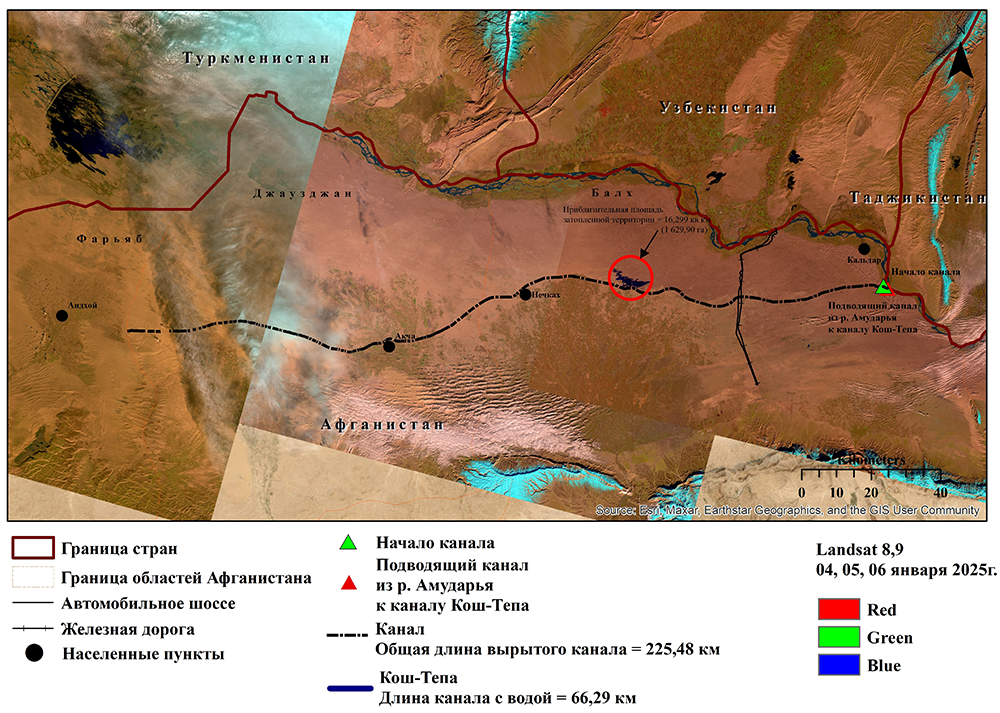
The Qosh Tepa Canal. The Qosh Tepa Canal phase 2 surpasses 81% completion. Work is underway on four bridges, and thousands of jobs have been created. The Afghanistan National Development Corporation plans to complete the excavation of the second stage with a budget of 20 billion AFN by the year end, bringing the canal to its final point in Andkhoy district (Faryab province). Once commissioned, the canal is projected to generate an average of $500 million in annual revenue for Afghanistan and enable national self-sufficiency in wheat production – a significant driver for future economic growth. The project to be implemented in three phases is scheduled for completion in 2028. The first phase, which included the construction of the initial 108-kilometer segment, was completed in a year and a half. The final phase includes plans to expand irrigated areas in Faryab, Balkh, and Jawzjan provinces. Beyond core irrigation, the project encompasses comprehensive infrastructure development. This includes the establishment of the 348,000-square-meter Khayraton agricultural complex, construction of railway and vehicular bridges across the canal, and development of highways along its entire length.
Based on satellite monitoring conducted by SIC ICWC, the total length of the canal was 225.48 km as of January 4, 2025. Of this length, the watered section observed on January 6 extended for 66.29 km. Concurrently, the total flooded area increased to 1,629.90 ha, representing an expansion of 169.48 ha since the last measurement of 1,460.42 ha on December 13, 2024.
Infrastructure initiatives to improve water supply and irrigation. A new 5.8 km water network with a solar-powered 150-meter deep well was constructed in Logar province. In Kandahar, a 2.5 km canal in Maiwand has been completed, and work continues on the 4 km Panj Ab Canal. In Nangarhar, three water supply networks and two reservoirs (30 and 50 m³) have been commissioned, supported by 5.4 km of new pipelines.
CASA-1000. The WB is resuming funding for the CASA-1000 project in a ring-fenced structure that would ensure all construction payments and future revenue are managed outside of Afghanistan and do not involve ITA. These arrangements include the use of international consultants to supervise progress, compliance with the WB’s environmental and social safeguards, and using third-party monitoring to verify progress and certify contractor invoices. According to the WB, before the project was paused, about 18% of the towers for the Afghanistan portion of the CASA had been erected and about 95% of the materials and equipment had been supplied.
TAPI. Construction of the TAPI gas pipeline within Afghanistan is now underway. The necessary equipment has been delivered to the Afghan-Turkmen border, and ground work has commenced. Afghanistan is expected to earn nearly $450 million annually in transit fees and receive 5 billion m3 of gas. The 1,840-km pipeline, with 214 km already completed in Turkmenistan, is designed to transport 33 billion m³ of gas annually. Under the proposed supply agreement, Afghanistan would receive 5 billion m³, with Pakistan and India each receiving 14 billion m³. The project’s total cost is estimated at $10 billion.
Financial mechanisms. The main source is the national budget. Additional funding: (1) donor organizations ($6.2 billion in humanitarian aid for 2021-2023); (2) private investments; (3) international programs (UNDP, ICRC).
Humanitarian aid. The WB endorsed the “Approach 3.0” program that will deploy funds from the IDA through grants to the UN agencies and international organizations supporting basic services nationwide, particularly those benefiting women; job creation is also advanced through support for income-generating activities, chiefly via private-sector-led microfinance initiatives.
The OCHA requested at least $3.06 billion to support the ongoing humanitarian response in Afghanistan for 2025 (OCHA report).
EU allocates: (1) €5 million to enhance food security and livelihoods in Ghor, Daykundi and Badakhshan provinces (agricultural production, cattle and poultry farming and support to micro, small and medium-sized businesses; knowledge and skills transfer on farming activities, with a special view to include women and youth); (2) $100 million for agriculture development projects.
France has allocated €3 million to support the WFP, which will provide nutrition to 70,000 pregnant and lactating women and children, as well as 50,000 schoolchildren. According to the UN, more than 24 million people will need humanitarian assistance in 2024. At the same time, only a small part of the requested $3 billion in funding was received.
International cooperation. A Kazakh-Afghan joint venture, Silk Road Company, has announced investments in Afghanistan’s hydro and wind energy production. The company is also exploring potential investments in mining, agriculture, electricity and water supply infrastructure, and flood prevention measures. To facilitate these projects, the Afghan MEWR has established the Energy Sector Investment Committee, which has already secured $100 million in commitments. Officials suggest that if international restrictions are lifted, Afghanistan could rapidly assume a more significant economic role in the region.
Uzbekistan, Russia, Kazakhstan, Iran and Turket will invest in mining and energy sectors, including construction of HPPs. It is reported that Afghanistan is still negotiating with some companies, and some have already started working.
Uzbekistan and Kabul signed 35 agreements worth a total of $2.5 billion, including $1.4 billion in investment deals and $1.1 billion in trade contracts to boost cooperation in energy, agriculture, and industry.
China
Mega water diversion project marks 10 years. The project’s concept originated in 1952, with full implementation projected for 2050 is an almost century-long timeline. Funded with 500 billion yuan, the project has a larger budget than the Three Gorges Dam. In 2024, China celebrated the 10th anniversary of the first stage of the project for the transfer of waters from the south to the north of the country. During this period, over 121.5 billion m³ of water was channeled to northern China – more than double the Yellow River’s average annual flow. The project now benefits approximately 200 million people across more than 60 cities , including Beijing, with the potential to serve up to 500 million in the future.
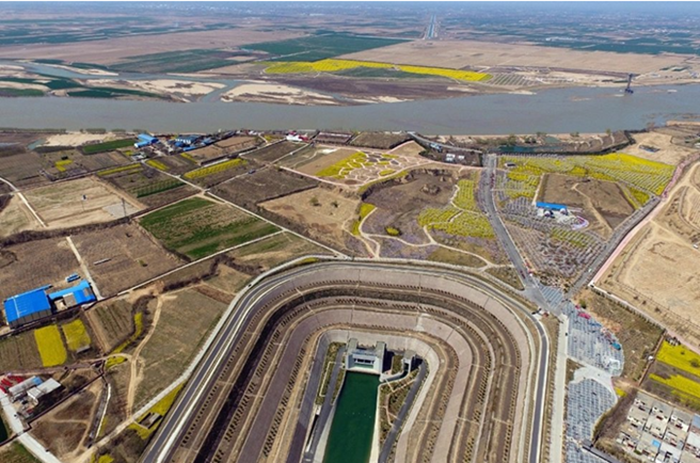
Project for water transfer from the south to the north of China
is the world’s most expensive hydraulic engineering project
The project has already delivered transformative benefits across the region. Tianjin now relies entirely on the project for its water supply, while Beijing meets 70% of its needs from this source. Within the capital, a quarter of this incoming water is dedicated to replenishing aquifers. This strategic recharge has reversed a critical environmental trend: over the past decade, Beijing’s groundwater levels have risen by 11 meters, averting the threat of catastrophic depletion and stabilizing the land. As a result, all 6,900 artesian wells – which once supplied a quarter of the city’s water – have been sealed. This decisive action has halted dangerous land subsidence, which in the Chaoyang district had reached a peak rate of 137 mm per year.
In 2023, the project launched the western route. Its first canals, linking the tributaries of the Yangtze and Yellow Rivers, were inaugurated on July 16, 2023. 98 km of water supply tunnels were drilled through the Qinling Mountains. Construction has been challenged by extreme terrain, with elevations from 80 to 450 m, need for numerous high-capacity pumping stations, and an earthquake risk of up to magnitude 8.
By the middle of the 21st century, the canal network will span 4,350 km and annually transfer 44.8 billion m3, which is comparable to the Yellow River flow of 50 billion m3. For this reason, the project has been dubbed the “Second Yellow River”, as it is designed to secure sustainable water supply for China’s northern regions and will form the basis for their long-term economic development.
China’s investment in hydraulic facilities reaches record-breaking in 2024 A record 1.35 trillion yuan ($185 billion) has been invested; 47,000 hydraulic projects have been implemented to enhance water supply and flood protection; more than 20,000 rural water supply projects have been completed, covering more than 100 million rural residents. Progress has been made in groundwater management: in 2024 groundwater diversion decreased by 31.9% compared to 2014. Reclaimed areas increased by 64 thousand km2.
China develops unconventional water sources: more than 18 billion m3 are utilized; recycled water utilization rate within water-scarce cities is over 24%. This enabled increased water supply, reduced sewage discharge and improved water use efficiency.
Beijing is a leader in water use efficiency. In 2024, water consumption per 10,000 yuan of GDP decreased to 8.45 m3 (ranking it first in the country). This reflects that each cubic meter of water contributed to an increase of 1,183 yuan in GDP. The city consumed 2,534 million m3 of water for production and daily life, with over 140 million m3 of water recycled. In the industrial and sanitation sectors, recycled water accounted for over 30% of total water consumption in each sector. Over 200 km of water pipelines were upgraded, reducing the leakage rate to less than 8.5%. 1.5 billion yuan in green financial bonds were issued to support water-saving programs. In 2024, about 14,500 water-saving appliances were sold; 30 water conservation management contracting projects were promoted, attracting 130 million yuan in social capital investment.
Water resource tax. China will start levying a water tax across the country from December, replacing the existing water resource fees. Benefits are provided only for some users. The tax will be calculated as follows: amount of water extracted × tax rate, with the exact rate set by each province. The minimum average tax rates include $0.01–0.22 per m3 for surface water and $0.03–0.55 per m3 for groundwater. Water scarcity is a significant issue in China: the country’s per capita water resources are only about ⅓ of the global average, and 16 provinces face water resource risks, with water deficiency at different levels in 300 cities.
China began trialing it in 10 provinces in July 2016, including Beijing, Hebei, and Shandong. Water consumption of GDP in Hebei, for example, has dropped 40% over the past eight years, with underground water extraction down 44%; water usage patterns were changed and water-saving reforms were promoted. Full implementation of the tax will help raise awareness and motivation among businesses to conserve water, encouraging businesses to improve water efficiency through steps to save water and technological innovations.
Air and water quality. China demonstrated steady improvement in air and water quality in the first nine months in 2024. The average density of PM2.5 in Chinese cities at or above the prefecture level stood at 27 mcg/m3, down 3.6% year on year. The proportion of days with good air quality was 85.8% (+1.6 pp). 88.5% of monitored sections had “fairly good” surface water quality – at or above Grade III in the country’s five-tier water quality system, an increase of 1.4 pp year on year. China has steadfastly advanced its “Beautiful China” initiative, emphasizing ecological and environmental protection as a top priority in its social and economic development.
Environmental initiatives. In 2024, China continued its “two mountains” concept, which literally means green mountains and clear waters are as valuable as mountains of gold and silver. A three-year campaign to clean up coastal waters has been launched, with the goal of eliminating drifting debris by 2025 and establishing a permanent cleanup system by 2027. Meanwhile, green energy accounted for 80% of the growth in national generating capacities. To combat desertification, a green belt has been established around the Taklamakan Desert, which stretches 3,046 km and is the world's largest strip of artificial plantings. By 2030, the initiative aims to restore 2.34 million ha. Chinese researchers have developed a low-cost biodegradable sponge capable of removing up to 99.8% of microplastics from water.
Systemic transformations. The key event of the year was a joint circular by the CPC Central Committee and State Council, which reoriented environmental policy from addressing immediate issues towards proactive prevention and establishment of a circular economy by 2035.
Climate litigation. Chinese courts have witnessed a decline in the number of trials concerning environment since 2021, with the number of criminal cases involving environmental pollution dropping significantly. In 2014-2024, Chinese courts have handled about 2.16 million cases concerning environment; the number of specialized judicial bodies has increased from 134 to more than 2,400, with more than 1,700 professional judges. The Supreme People’s Court has formulated and revised 21 judicial interpretations in the area over the past decade, with 22 normative documents issued.
Floods. Heavy rains hit China in 2024. Rainstorms in east China’s Anhui province have left 811,000 residents affected and forced the evacuation of 195,000 people; the Yangtze River has seen water levels exceed their warning marks; 26,000 people were sent to patrol dikes. In April, about 20,000 people have been evacuated in Huaiji County after days of heavy rain; some power facilities in Zhaoqing were damaged, cutting power in some places; in Guangzhou, a city of 18 million, reservoirs have reached flood limits.
Other Asian Countries
India. Bengaluru, known as the India’s Silicon Valley and the third most populous city in India, faces a water crisis. This is attributable primarily to arthritic governance rather than climatic conditions. Rampant urbanization coupled with an increase in concrete structures in the last 50 years has impacted the groundwater table. The energy cost for pumping eats up 75% of the Bangalore Water Supply and Sewerage Board’s revenue, while supplying only around half of what the city needs. The rest come from 14,000 wells, half of which are now dry. Authorities are implementing emergency measures to combat the crisis. This includes a ban on using drinking water for non-essential purposes – such as car washing, filling pools, and entertainment events – and imposing a 20% water supply reduction for major consumers like businesses, hospitals, and transport hubs. Additionally, special mobile applications have been launched to monitor wastewater treatment, track drinking water usage, process well-drilling permits, and detect leaks in the wastewater disposal system.
Amid the ongoing crisis, activists and community leaders are championing innovative solutions. One prominent proposal involves repurposing urban reservoirs, many of which are currently used for wastewater discharge. Proponents advocate for blending collected rainwater with treated wastewater within these reservoirs. They argue that this integrated approach could transform the sites into a sustainable and safe supplementary water source for local communities.
Cambodia. The WB approved $145 million for the Cambodia Water Security Improvement Project intended for 5 years. Over 113,000 people in Cambodia are expected to benefit through: (1) expanded hydrometeorological stations; (2) updated policies and regulations; (3) prepared climate-informed river basin management plans; (4) strengthened performance of central and provincial water authorities.
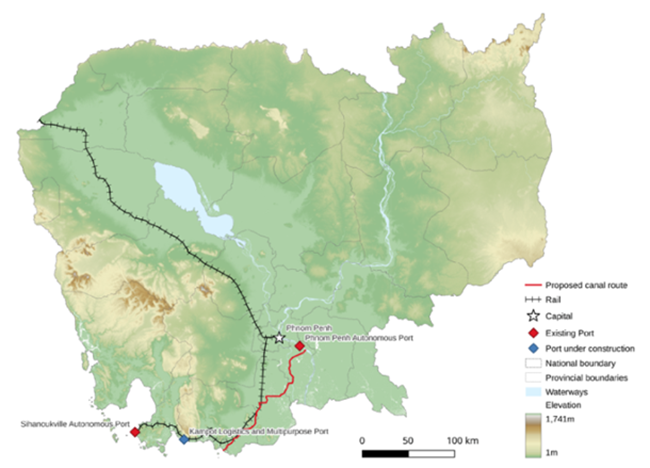
The country launches an ambitious China-funded Funan Techo canal project ($1.7 billion, 180 km long, 80-100 m wide and 5.4 m deep). The canal is capable of accommodating cargo vessels of up to 3,000 deadweight tons (up to 5,000 tons in rainfall season). By 2028, construction is planned for 3 floodgates, 11 bridges, and a new highway along the canal. The project’s primary goal is to reduce transportation costs and provide Cambodia with direct access to the Gulf of Thailand. This new route will reduce Cambodia’s reliance on Vietnamese Mekong waterways and strengthen its economic independence. While Cambodian authorities stress its strictly domestic nature and non-targeting of third countries, specific concerns have emerged. Vietnam, in particular, worries about lost transit fees and views deepening Sino-Cambodian cooperation as a potential challenge to its own strategic interests. Simultaneously, environmental risks are a growing focus of debate. Experts warn that altering the river’s flow could disrupt the regional hydrological balance, potentially intensifying monsoon flooding or affecting water availability for neighboring countries.
Laos. The Lao government will intensify efforts to address the detrimental environmental and community impacts of development projects, especially mining. The key measures include eliminating concessions in rich forest zones, banning new projects in protected forests, and stricter environmental assessments for projects near water, farmland, or residential areas. Developers were now required to collaborate directly with local communities through contract farming, ensuring that their projects do not impact protected forest areas or lands vital to residents’ livelihoods.
Japan. The operator of the crippled Fukushima Daiichi NPP completed its 7th round of treated radioactive water discharge into the ocean. Tokyo Electric Power Company Holdings Inc. released around 7,800 tons of water in the latest round, which started on June 28. Prior to discharge, water used to cool melted fuel at the plant is passed through an advanced liquid processing system that removes most radionuclides apart from tritium. TEPCO detected 18 becquerels of tritium per liter from seawater sampled from the facility’s outlet, below its own limit of 700 becquerels. The water discharge is expected to span 30 years. In response, China has banned the import and processing of Japanese seafood, while Russia has imposed restrictions on Japanese fish products.
Green investments in Southeast Asia. Private green investments in Southeast Asia rose 43% to US$8 billion in 2024. About 70% of these investments came from foreign investors contrary to 30% in 2023. The leaders are Malaysia (growth by 124% to $2.3 billion or 29% of the total) and Singapore (growth by 194% to $2.7 billion or 33% of total investments). A decrease in investment was observed in the rest of the region: 22% or $1.2 billion in Indonesia; 19% or $161 million in Vietnam; 12% or $1.3 billion in Philippines; 10% or $355 million in Thailand.
When analyzing the allocation of green investments, about 2/3 went into clean energy projects, particularly solar, which saw capital flows doubling from the previous year and accounting for 21% of the total investments. Investments into industrial waste management, which made up 9% of investments, also increased, primarily driven by water treatment and recycling projects. In contrast, electric vehicles and agricultural productivity experienced a decline in investments. Despite the jump, there is still a funding gap of about US$50 billion for these six Asian markets to meet their stated climate pledges by 2030 and reduce emissions by another 600 million tons of carbon dioxide equivalent (tCO2e).
Large River Basins in South Asia
Mekong River Basin
The largest Mekong River shallowing. A record low water level has been recorded along the Mekong River, reaching critical levels in some areas. The Mekong River Commission (MRC), on a special expedition, confirmed this severe shallowing. Prolonged drought and upstream dams in China, which regulate water flow, are cited as the primary causes. Environmentalists note that a significant drop in water levels was first observed historically after China’s Manwan hydropower station began operation in 1993.
The MRC and Japan strengthen cooperation in flood and drought forecasting (April 23, Vientiane). The Japanese Ambassador visited the MRC Regional Flood and Drought Management Centre, where the MRC provided comprehensive updates on its activities and achievements. The parties focused on potential future collaborations, including improvements in tributary forecasting, upgrades to flash flood and drought forecasting with implications for agriculture, and enhanced support for transboundary drought adaptation. Japan has been a key development partner for the MRC, contributing significantly to the ongoing cycle for 2021 - 2025. This partnership underscores Japan’s commitment to fostering resilience in the Mekong region through advanced technology and international cooperation. The exact amount of Japan's contribution, set at approximately $ 8.2 million, reflects this strong commitment.
The LMC’s Water Resources Cooperation Center and the MRC Secretariat have organized a joint survey of the Lancang River source (July 14-20). A comprehensive expert assessment of water resources and ecology in the upper basin will inform future water management strategies. Key outcomes include expanded knowledge of the river’s current state and ecosystems. The collaborative process also allowed riparian countries to enhance their understanding of water dynamics and improve disaster monitoring and forecasting systems. These measures are critical for protecting vulnerable communities, mitigating flood and drought damage, saving lives, and ensuring infrastructure sustainability.
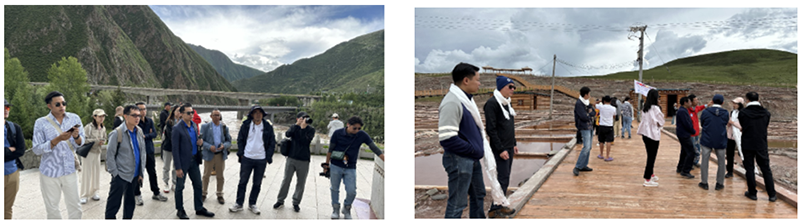
At the 9th LMC Foreign Ministers’ Meeting, Chinese Minister of Foreign Affairs Wang Yi put forward a four-point proposal on the development of LMC in the next stage: (1) peace and stability to uphold a common vision; (2) innovation-driven development to bridge the digital divide; (3) interconnected development to enhance growth momentum; (4) people-to-people connectivity to cultivate the Lancang-Mekong culture (August 16, Thailand).
The MRC inaugurated a new core river monitoring station in Champassak province (November 15, Laos). This strengthens the disaster risk management system and enhances preparedness for floods and droughts. With 62 meteorological and hydrological stations across the Lower Mekong Basin – 11 of which were added or upgraded this year – the network provides real-time data every 15 minutes. This includes water levels, rainfall, and quality indicators, transmitted to the MRC Secretariat and national agencies. Laos alone operates 22 of these stations, with 5 newly established in 2024, and also hosts 13 of the 45 automatic water quality monitoring stations. Expanding the network will enable the MRC to deliver more accurate and timely data on river conditions, encompassing the impacts of climate change and dam operations. This information is critical for protecting communities and ensuring sustainable water management.
The MRC Council convened to review progress, address the growing challenges facing the Mekong River Basin, and re-commit to regional cooperation. The meeting marked a historic moment for the MRC, with the Council appointing Ms. Busadee Santipitaks of Thailand as the incoming 9th Chief Executive Officer for the MRC Secretariat. She will serve from 2025 to 2027, becoming the fourth Mekong riparian official and the first woman to hold the post. The Council also approved the 2025–2026 Multi-Year Work Plan, which will contribute to implementation of the Basin Development Strategy, strengthen climate resilience, and improve water resource management across the region (November 28, Laos).
Indus River Basin
The Government of India formally requested the Government of Pakistan to review the Indus Waters Treaty (IWT) citing “fundamental and unforeseen changes” in circumstances, such as population demographics, environmental issues, and the need for clean energy development to meet emission targets. Pakistan for its part is willing to grant the request, referring the case to the Indus Commissioners appointed by both countries to the Permanent Indus Commission. However, India has reportedly taken the position that doing so would be to execute the treaty, and that there should be no more meetings of the Commission until a willingness to renegotiate the treaty has been expressed.
The Permanent Court of Arbitration (PCA) based in the Hague has declared that they have the jurisdiction to preside over the Pakistan-India conflict over the contentious Kishanganga and Ratle hydroelectric projects in the territory of Kashmir. This decision was an important milestone in the long-running conflict over the Indus Waters Treaty (1960) regulating water distribution in the basin: waters from Sutlej, Beas, and Ravi are offered to India, while Indus, Jhelum and Chenab are specifically assigned to the Pakistan. The current disputes revolve around two significant hydroelectric projects on the tributaries of Jhelum (Kishanganga) and the Chenab (Ratle) Rivers. Pakistan called for the dispute to be settled through arbitration, while India sought the appointment of a neutral expert. Nevertheless, India continues to deny its participation in the PCA and to state that the judge has no competence in the given dispute and that the problem should be resolved with the assistance of a neutral expert only. The PCA rejected India’s objections. This is a victory for Pakistan, which for long has indicted India of manipulating the flow of the two countries’ shared rivers that would change agriculture productivity and food security. The decision of the PCA reinforces the provision that absence of India does not make the court incompetent or the awards unenforceable. This reinforces the international dimension of the conflict – a dimension that reflects both entrenched geopolitical contradictions and differing interpretations of the Indus Waters Treaty.
11.3 America
In Latin America investors and agribusiness are increasingly buying up small parcels of land with abundant water access, thus securing control over the vital resource. Planting water-intensive crops and expanding irrigated cultivation are exacerbating water scarcity. This is the so called “water grabbing” – a form of land grabbing except it refers specifically to the control of water. In countries like Chile, Mexico and Peru, it has also put a greater strain on an already overwhelmed water supply. In a context of climate change and global water scarcity, agribusiness and investors are seeing access to water as a major asset and are increasingly targeting land with freshwater and coastal access, as well as forests, aiming to rapidly extract value from these resources. Latin America and the Caribbean are attractive to investors: the region has the greatest agricultural land and water availability per capita. Export-orientated agriculture has become a major source of the region’s income, and governments have responded by making huge investments in irrigation and infrastructure, as well as rolled out special tax breaks and trade deals to open new markets.
Brazil. In May, heavy rainfall and severe flooding struck Rio Grande do Sul, a Brazilian state bordering Uruguay, triggering a major humanitarian crisis. The disaster affected 2.34 million people across 467 of the state’s 497 municipalities, claiming 161 lives and displacing approximately 581,000 individuals – 71,500 of whom sought temporary shelter. In the state capital, Porto Alegre, the Guaiba River swelled to 4.02 m, far exceeding its critical level of 3 m. Rescue operations mobilized over 27,000 people, 18 aircraft, and 265 ships. The floods crippled infrastructure, blocking 106 highway sections and cutting off electricity to more than 180,000 customers and water supply to about 40,000. Shortages of food and basic necessities were also widespread.
Colombia. In spring, residents of Bogota started rationing drinking water as the city's reservoirs hit drastically low levels. Bogota and the municipalities received water in shifts, with only certain neighborhoods having to ration for a 24-hour period. The Chingaza system, supplying the capital city with 70% of its drinking water, has the most critical state of water levels – water storage in the San Rafael and Chusa reservoirs was at less than 17% capacity. The northern reservoir system barely reached 54.23% capacity. The southern system, which accounts for 5% of the water supply, has less than 45% capacity. The region’s drinking water supply system is made up of three systems with eight total reservoirs supplying water to more than 10 million people. The crisis was caused by a prolonged drought, a consequence of the El Niño phenomenon. Many other cities and countries have been facing a similar issue, including Mexico City. The city office is advising people to reuse rainwater, reduce shower time, minimize clothes and car washing, and reduce garden irrigation.
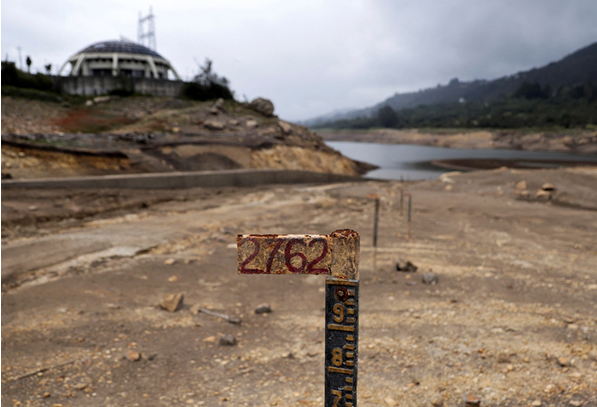
San Rafael Reservoir in La Calera, Colombia,
April 8, 2024
Peru. The Civil Court of Loreto issued a ruling that upholds the rights of the Marañón River, marking a significant victory for environmental justice and Indigenous rights in Peru. Originating in the Andes and flowing into the Amazon, the Marañón is critical to biodiversity and Indigenous communities. The Court recognized the Marañón and its tributaries as legal rights-holders, establishing protections for their ecological health. The ruling also sets critical legal precedents by mandating that a company, operating in the river basin, take immediate, comprehensive measures to protect the river from further contamination, and by establishing watershed councils to oversee sustainable river management.
Mexico is experiencing its most severe widespread drought in over a decade, with approximately 90% of the country now affected. The northern state of Chihuahua faces the most critical conditions, where the majority of small reservoirs have completely dried up and water levels in major rivers have reached historic lows. The drought has had a devastating impact on ecosystems: thousands of fish (authorities use lime to contain disease), bats, and parrots have died. Farmers are experiencing devastating losses. The drought is proving fatal for livestock, while a rapidly declining area of coffee plantations is expected to slash annual bean production by close to 30%. Mexico City, a sprawling metropolis of nearly 22 million people and one of the world’s biggest cities, is facing a severe water crisis. Around 60% of Mexico City’s water comes from its underground aquifer, but this has been so over-extracted that the city is sinking at a frightening rate – around 50 cm a year. And the aquifer is not being replenished anywhere near fast enough. The rest of the water is supplied from external sources, but the process is inefficient, as approximately 40% of it is lost due to leaks in the system. The situation is aggravated by drought. The crisis has set up a fierce debate about whether the city will reach a “day zero”, where the Cutzamala system (a network of reservoirs, pumping stations, canals and tunnels) falls to such low levels that it will be unable to provide any water to the city’s residents. To mitigate the crisis, Conagua, National Water Commission, said it is undertaking a 3-year project to install, develop and improve water infrastructure to help the city cope with decreases in the Cutzamala system, including adding new wells and commissioning water treatment plants.
A water war is looming between Mexico and the US. A severe drought in Mexico is preventing it from meeting its obligation to deliver 1.75 million m3 of water to the US under a 1944 treaty , leading to critical water shortages for American farmers.
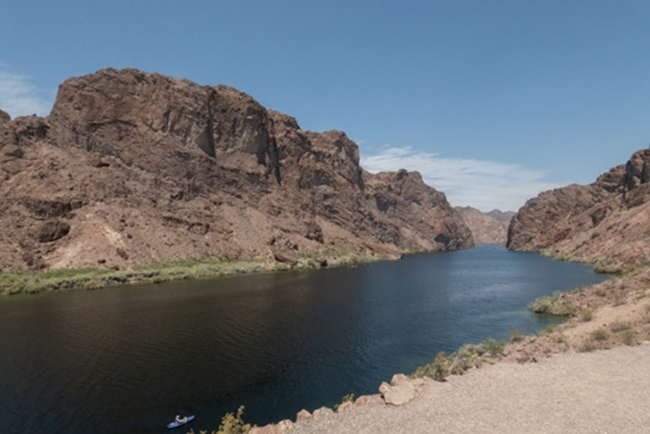
Water from Mexico goes to the Falcon and Amistad reservoirs, which straddle the border and provide water to homes as well and farms. Both reservoirs have slumped to historically low levels – Amistad was at less than 26% capacity and Falcon was at only 9.9%. The state’s only sugar mill, opened in 1974 and employed more than 500 workers, was shut. The economic impact of the drought has spread across the US southern border. In Louisiana, candy producers have been forced to switch to expensive imported raw materials. In Texas, the citrus industry is under severe threat, and municipal construction projects have been halted due to acute water shortages. Experts warn that a total collapse of the Texas agricultural sector could cost the US economy up to $500 million and eliminate 8,400 jobs. In response, Texas state authorities have urgently appealed to Congress, requesting a suspension of US water deliveries to Mexico until it fulfills its treaty obligations. This controversial measure has been included in the draft 2025 federal budget, though it remains uncertain whether a majority of lawmakers will support the initiative.
The Yolo County Superior Court ruled in favor of the Sites Reservoir project following the claim of environmental groups. It is the largest water storage facility in nearly 50 years in California. The Court ruling marks the first time a CEQA process has been streamlined under Newsom's SB 149, which allows the governor to certify certain projects for judicial fast tracking. The proposed $4.5 billion reservoir would inundate nearly 5,700 ha of ranch lands in Glenn and Colusa counties to store water diverted from the Sacramento River through a new system of dams, pipelines and a bridge. With a maximum capacity of 1.5 million acre-feet (1.85 km3) of water, Sites will boost storage amid unpredictable climate swings. Critics warn it will threaten river habitat for fish and other wildlife and lead to minimal water storage benefits. The Court found that the environmental review was sufficient. Sites Reservoir is currently acquiring a multitude of state and federal permits, including a water rights process, to start construction, which is expected to begin late 2026.
In 2024, the US Environmental Protection Agency (EPA) announced its intention to make changes to national drinking water standards regulating certain per- and polyfluoroalkyl substances (PFAS or eternal chemicals): (1) new measures now target PFAS: approved analytical methods, listing of seven substances as toxic, and a ban on producing “inactive” PFAS (January); (2) newly proposed rules would list nine PFAS as hazardous materials and consolidate the authority of the EPA and states to mandate the cleanup of contaminated areas (February); (3) Safe Drinking Water Act was finalized to establish concentration limits for six PFAS (including PFOA, PFOS, GenX, PFNA, PFHxS and PFBS). Utilities are mandated to monitor these substances and ensure regulatory compliance by 2029 (September); (4) the White House released an updated PFAS federal research strategy aimed at coordinating the efforts of the agencies (September). These measures demonstrate the EPA’s commitment to a systematic fight against “eternal chemicals”.
11.4. Australia and Oceania
Australia
Murray-Darling Basin Authority responds to stakeholder consultations. In recent years, the river has been the subject of competition between different users at the heart of numerous tensions between different users, and the need to ensure sufficient water to support the functioning of ecosystems has been of particular concern. A basin plan was put in place in 2012 and is due for review in 2026. In support of this process, a Basin Leadership Summit was held in April, followed by the publication of an official response to stakeholder contributions. This took place in the context of mounting concerns that the annual return of water for environmental purposes is lagging behind the established goals (2,186 gigalitres released against a goal of returning 3,200 gigalitres). Part of the discussion has equally shifted, underlining a desire to move away from a purely volumetric approach, towards setting clearer environmental goals for the basin. For this reason, the Australian government, faced with an assessment of failure, had made a series of announcements in December 2023, at the occasion of the introduction of the Restoring our Rivers Act, including the postponement of the end of the 3.5-year plan until December 2027, as well as the introduction of financial support for communities affected by water buybacks. With a view to starting afresh and on a better footing, the government decided to organize a consultation with all parties which would iron out disputes and find common ground for solutions that feed into the next basin plan, to be drawn up by 2026.
In February, the Government of New Zealand put on the scrap-heap the prior “Three Waters” reform program and presented the new Local Water Done Well plan (August 8, 2024). Its aims at providing local government with the certainty it needs to deliver water services, while minimizing costs on ratepayers. Local Water Done Well plan includes: (1) Councils retain ownership of water infrastructure assets; however, they have the option to pass services on to new “water organizations” – new, financially separate, which will be set up as LLCs. These water organizations can be owned by a single council, jointly with other councils or consumer trusts; (2) new organizations will have access to financing with a higher borrowing limit than councils, and will also be able to set tariffs and collect water charges; (3) all water service providers (Councils and new organizations) will be required to comply with a set of minimum requirements; economic and environmental regulation, financial sustainability, new strategic planning, accountability, and protections against privatization. The Commerce Commission will oversee the economic regulation; (4) the plan is also proposing several changes to reduce burden for small, low-risk suppliers and to introduce a mandatory set of national engineering design standards and a flexible framework for the management of stormwater services; (5) the Government will have the right to intervene in case of serious violations through the appointment of special commissioners. Thus, the new plan assumes different implementation options (joint structures, consumer trusts, direct management of councils) and is designed to stimulate long-term investments in New Zealand’s water infrastructure.
11.5. Europe
11.5.1. Western and Southern Europe
Albania. Albania has commenced a comprehensive assessment of access to water and sanitation to generate a baseline measure of equitable access to these services. The assessment makes use of an Equitable Access Score-card tool, which scores responses to qualitative and quantitative questions about the management and effectiveness of water and sanitation services in the country. Using the scorecard is not an obligation for the parties to the Protocol on Water and Health, but the use of the tool is highly encouraged in UNECE countries to support the generation of a baseline measure of equity of access to water and sanitation. This enables a country to identify related priorities, to set targets to bridge the identified gaps and to evaluate progress. In the realm of river basin management, Albania is currently preparing three RBMPs in accordance with WFD requirements, and it has been further proposed that the equitable access scorecard should be extended to the basin level. In particular, the Ishmi River Basin is the most densely populated basin in the country and is home to the capital city Tirana and the coastal town of Durres – together accounting for 35% of the total population.
Greece. A massive fish die-off occurred in Volos, on the coast of the Pagasetic Gulf, where over 40 tons of dead fish were cleared daily. Environmentalists attribute the event to the aftermath of last year’s floods, which washed freshwater fish from the flooded Thessalian Plain into the Gulf’s salty waters.
Dutch water utilities are expressing concern over PFAS and pesticide concentrations in the Rhine and Meuse/Maas Rivers. Although the EU banned production of all PFAS, the EU guidelines do not include their use in pesticides. The Union of Dutch Utilities VEWIN reportedly finds this situation unacceptable. In 2023, researchers at the University of Amsterdam found that levels of PFAS in drinking water from surface water sources exceed safe levels. The Dutch National Institute for Public Health and the Environment Netherlands’ Environmental Agency advised to lower the concentrations of PFAS in drinking water to 20%. The quality of the Maas River had deteriorated further: in 11% of all measurements of water quality, pollution levels were above the maximum. This led to a total of 62 halts on the intake of water for treatment for drinking water in 2022. In addition, the river’s flow has declined because of climate change. As a result, water utilities requested more transparency from authorities about the indirect and direct discharge permits issued to companies.
Ireland. The EU’s Court of Justice declared that Ireland failed to fulfill its obligations under article 4 of the Drinking Water Directive 98/83 by not doing enough to bring down the level of trihalomethanes in drinking water. The Court has ruled in favor of the EC’s 2021 lawsuit.
Spain. Catalonia is suffering the worst drought on record, leading authorities in the region to declare a drought emergency for some 80% of the population. The government has announced the introduction of measures under phase I of its drought response plan for the Ter Llobregat system, which covers a total of 220 municipalities. For about 6 million people, a restriction of domestic water consumption to 200 l/p/d was introduced. A reduction by 80% of water consumption in agriculture, 50% in stock keeping, and 25% in industry and recreational facilities is envisaged.
Poland. In September, the country experienced one of its largest floods in recent decades. Prolonged torrential rains caused the Vistula, Odra, and other rivers to overflow, flooding communities – particularly in the eastern and southern regions. A state of emergency was declared and thousands of people were evacuated.
Croatia. Croatia’s Karlovac County Assembly officially confirmed the protection of the Mrežnica and Tounjčica rivers. As a result, the upper part of Mreznica and Tounjcica rivers have been protected as a “Monument of Nature”, which the IUCN classifies as a ‘category III’ monument. Thanks to the efforts of local communities and international environmental organizations, these unique karst rivers with hundreds of fragile tuff stones and waterfalls have been protected. The measures taken are aimed at preserving biodiversity, aquatic ecosystems and cultural and tourism potential in the region.
The EU Counci agreed its negotiating mandate on the directive, which will amend the water framework directive, the groundwater directive and the directive on environmental quality standards. The proposal updates the list of water pollutants by adding new pollutants and related quality standards for some PFAS, pharmaceuticals and pesticides, and provides for intermediate reporting, new monitoring techniques, and the possibility to set up an EU-wide monitoring facility. The concept of deterioration of the status of a water body is clarified. Common standards for synthetic substances, including PFAS, are being introduced for groundwater, with a transition period until 2039, as well as a mandatory “watch list mechanism”. The relevant pollutants list for surface water and groundwater is to be updated through legislative acts instead of the initial proposal to have them amended via delegated acts of the Commission. Setting environmental standards contributes to the European Green Deal’s zero pollution ambition of having an environment free of harmful pollution by 2050.
Rhein River Basin
The International Commission for the Protection of the Rhine (ICPR) released its new report on the impact of climate change on the flow of the river and its tributaries, predicting a significant increase in hydrological extremes by 2100. In winter (November-April), the risk of flooding tends to increase, and droughts are likely to occur more frequently due to stabilizing influence of glacier and snow melt in summer (May-October). The pressure on the ecosystem of the Rhine will increase, drinking water supplies will become more complicated and shipping will be increasingly restricted. The updated discharge scenarios, based on the data from the 5th ICPR Report, shaped the ICPR Technical Report No. 297 and will become the basis for reviewing the strategy for adaptation to climate change by 2025. As part of its Program Rhine 2040, a workshop with the participation of all stakeholders is planned to develop practical measures to improve climate resilience in the basin.
The states have continued their exchange on the progress made in implementing measures to restore ecological continuity in the southern Upper Rhine in 2024. Construction work on the fish passes at the Rhinau and Marckolsheim barrages in France is progressing. France and Germany have agreed on a procedure for making the Gerstheim and Rhinau loops passable. A set of technical specifications is currently being drawn up for the lower weir at the Gerstheim loop. The modification of the two lower weirs at the Rhinau loop will be carried out as part of the French-German INTERREG project Rhinaissance 2.0. This project is part of a cross-border cooperation program aimed at restoring the Rhine ecosystem.
Workshops held in 2024: (1) “Balance and sediment management” (June 24-25, Strasbourg); (2) “Microplastics in the River Rhine – Methods, Occurrence and Effects” and “(Micro-)plastics in the Rhine – emission sources and possible measures” (December 11-12, Bonn).
Source: ICPR progress report
Danube River Basin
The Danube River Basin, particularly Hungary, experienced significant hydrological activity. Several stations exceeded critical water level thresholds, indicating heightened flood risks. Sixteen stations recorded mean discharges below the 10% quantile, suggesting potential drought or low-flow conditions, while others exceeded the 90% quantile, highlighting high flood risks.
Extreme events: (1) the wrecks of explosives-laden Nazi ships sunk in the Danube River during World War II have emerged near Serbia’s river port town of Prahovo, after a drought in summer that saw the river’s water level drop. The wrecks hamper river traffic as the Danube stood at 1.17 m, close to record lows, in Budapest. Critical drought conditions affected crops and vegetation; (2) triggered by abnormally heavy September rainfall, water levels in the Danube surged, prompting Budapest authorities to declare the third-degree threat level for all flood protection facilities – a situation reminiscent of the catastrophic 2013 flood. Emergency measures were implemented to protect the city and its suburbs. Meanwhile, severe flooding also impacted Southern Germany and Austria.
The Danube Day was celebrated in June, and various events were organized in the Danube countries, particularly, to mark 30 years since the Danube River Protection Convention.
The International Commission for the Protection of the Danube River (ICPDR) hosted: (1) regional workshops together with the WB on rural water services management in the Danube Region and implications for necessary actions to reach EU water directives compliance (April 17-18, hybrid format); (2) workshop “Sustainable Hydropower Development and Environmental Objectives – Framework, Challenges, and Ways Forward” to address reconciling hydropower development with the need to protect the fragile ecosystems in the Danube region. The participants focused on the core challenge of managing water sustainably for hydropower, seeking viable approaches and compromises between economic development and environmental protection (June 4-5, Vienna); (3) 27th ICPDR ordinary meeting focused on flood risk management, biodiversity conservation, development of advanced information systems, and public participation (December 10-11).
Slovakia commenced leadership of ICPDR Presidency, succeeding Serbia for 2024.
11.5.2. Eastern Europe and Caucasus
Azerbaijan
Water management. Azerbaijan has approved a National Water Efficiency Strategy for 2024-2040 focused on modernizing water management systems, combating pollution, adopting desalination technologies, and upgrading irrigation infrastructure. The Strategy prioritizes tariff reform, planning to introduce differentiated rates and cost-based pricing in 2024-2027 to incentivize efficient water use. A key focus will be on water development in Garabagh and Eastern Zangezur, which host a quarter of the country's water stock, largely sourced domestically. The plan includes building over ten new reservoirs in the region, reconstructing the Shirvan Canal to restore an irrigated area of 230,000 ha and subsequently revive the dried-up Hajikabul Lake, and upgrading the Karabakh Canal to water 115,000 ha.
Additionally, a project on desalination of the Caspian Sea water for irrigation and drinking purposes is underway to address climate change risks. The construction of canals and reservoirs will be partially funded by a $97 million loan and a technical assistance grant from the IsDB.
Agriculture. Azerbaijan is advancing large-scale projects to establish agricultural parks to bolster national food security. The national plan calls for 24 such parks, spanning 66,000 ha across 22 regions. To date, 22 parks are operational, covering 58.6 thousand ha, with two more currently under construction. These facilities specialize across key agricultural sectors: 6 parks focus on animal husbandry, 6 parks on fruit growing, 11 parks on crop production, and 1 park on sorting, packaging, and logistics. The total investment in these projects is estimated at 1.2 billion manats, with state support amounting to 147 million manats.
From January to November 2024, the agricultural production reached 12.2 billion manats, marking a 1% increase over the same period last year. This overall growth was supported by both animal husbandry (+1.4%) and crop production (+0.6%). Grains and legumes emerged as the standout category, contributing over 3.2 million tons at an average yield of 31.9 c/ha. Beyond this, however, production trends diverged: potatoes, grapes, and green tea recorded declines of 7.6%, 9.3%, and 4.9% respectively, while vegetables, cucurbits, and fruits/berries grew by 1%, 11.9%, and 4.8%.
Energy. In 2024, electricity generation amounted to 28.4 million kWh in Azerbaijan. TPPs remained the largest energy source, generating 24.5 billion kWh. However, RES production increased substantially, reaching 3.85 billion kWh – an increase of 1.73 billion kWh from the previous year. The growth was primarily driven by HPPs, which produced over 3 billion kWh, and SPPs, which saw a significant increase of 476.9 million kWh. Other contributors included wind (51.1 million kWh) and waste-to-energy plants (232.5 million kWh). As a result, renewables now constitute 14% of the country’s total energy mix.
Azerbaijan plans to commission additionally 7 GW of RES. Of these, 2 GW will be designed to supply the domestic market, 4 GW and 1 GW will be directed for export along the Azerbaijan-Georgia-Europe green energy corridor through the Black Sea and along the corridor through the Nakhichivan Autonomous Republic to Turkey and Europe, respectively.
Environmental protection and green development. Azerbaijan has designated 2024 as the Year of Solidarity for a Green World, reinforcing its commitment to combating climate change. This aligns with one of the nation’s five key socio-economic priorities for 2030: becoming “a country with clean environment and green growth”. Consequently, Azerbaijan is implementing measures to enhance environmental quality, expand green spaces, promote efficient use of water and sustainable energy. The country aims to reduce GHG emissions by 35% by 2030 and by 40% by 2050, relative to 1990 levels.
Azerbaijan hosted the 29th UN Climate Change Conference (COP 29) in Baku, becoming the first post-Soviet nation to do so (November 11-22).
International cooperation. The 1st procedural meeting in the inter-State arbitration brought by the Republic of Azerbaijan against the Republic of Armenia under the Energy Charter Treaty took place in the Hague. Baku requests compensation as Armenia excluded Azerbaijan from accessing energy resources in the Garabagh region and expropriated those resources for its own use throughout the illegal occupation. The arbitration was initiated in February, 2023 after the failure of negotiations. The arbitration has been asked to rule definitively on Armenia’s non-compliance with its legal obligations under the ECT and to order just compensation (January 12).
Armenia
Water management. An irrigation modernization program is ongoing in Armenia with $50 million in support from the Eurasian Fund for Stabilization and Development. To date, approximately 400 km of canals have been rehabilitated, exceeding the original target of 340 km. The program focuses on four key areas: (1) reducing energy costs by replacing pumping stations with gravity-fed irrigation; (2) constructing and restoring main and distribution canals; (3) installing new on-farm systems; and (4) advancing institutional development to improve management efficiency. This nationwide initiative is scheduled for completion by June 30, 2025, with the first three components already 95% complete.
Lake Sevan’s water level remained at critical lows throughout 2024, and irrigation withdrawals hit a 15-year nadir of 131 million m3 (down 41% from 2023). The lake’s depletion is a legacy of the 1930s era hydroelectric projects; post-1933, the level fell by approximately one meter per year, totaling an 18-meter drop by the mid-1960s. A new downward trend emerging in 2017 continues to destabilize the ecosystem and cause significant shoreline waterlogging.
The Ararat Valley is facing a critical depletion of groundwater reserves, leading to a suspension of permits for new artesian wells. Meanwhile, a parliamentary mandate requiring fish farms to convert to closed-circulation systems was overturned following a legal challenge, leaving the regulation in limbo. The Ministry of Environment is now exploring alternative regulatory measures. In parallel, efforts to seal “orphan” or uncontrolled gushing wells continue, with 59 such sites already identified.
Agriculture. In 2024, demand for intensive garden subsidies shattered expectations. While only $560,000 was forecast, applications neared $3 million. To qualify, farmers must confirm land preparation and submit purchase documents. The state compensates up to 50% of land reclamation costs and up to 30% of the purchase price for plots over 5 ha.
Armenia and ADB have signed a grant agreement for the Climate-Adaptive Food Security Enhancement Project ($3 million). The Project will support ten villages in implementing climate-resilient energy solutions, developing sustainable agriculture and local income sources, and strengthening institutional capacity for adaptation planning.
Energy. In 2024, electricity generation rose by 6.5% year-on-year to 9,381.4 million kWh. Solar generation exceeded 10% of this total, reaching 975 million kWh, equally supplied by commercial stations and autonomous panels from citizens and small businesses. This solar surge has prompted two key regulatory shifts: it creates temporary operational limits for nuclear plants and, since July 2024, requires large solar plants to curtail output upon the system operator's signal to prevent grid overload. Meanwhile, Armenia maintains one of the most liberal regimes for small installations (up to 150 kW), which feed all their energy into the grid without restriction. Looking ahead, the country aims to balance nuclear and solar generation while expanding electricity exports via new transmission lines to Iran and Georgia.
Environmental protection. The law “On Environmental Protection Service of the Republic of Armenia” came into force on January 1. It establishes an eco-patrol unit, integrating approximately 1,180 inspectors from the “Khayantar” organization and national parks. Following a training period, these inspectors will patrol forests and protected natural areas.
International cooperation. Yerevan is coordinating with Turkey on a $1 million dam project to direct the Araks River to its former course near Araksavan and Burestan. The river, which forms the border, shifted due to illegal sand extraction on the Armenian side, creating a 400-hectare island. The proposed 130-meter-long and 8-meter-high dam aims to overcome this problem.
Georgia
Water supply. The Spanish Aqualia is modernizing the water supply system in Tbilisi, Rustavi, and Mtskheta, which are operated by Georgian Water and Power . In 2024-2026, the project will repair hundreds of kilometers of pipelines and upgrade critically outdated infrastructure. These efforts are expected to significantly reduce system failures, enhance water supply reliability, and automate customer service processes. The inspection revealed 62% of the distribution networks and 85% of major water supply and sewerage facilities are severely worn out.
Agriculture. The Government of Georgia has approved the 2024–2027 Action Plan for the Agriculture and Rural Development Strategy (4.3 billion GEL). The plan outlines three strategic priorities: (1) promotion of competitive agricultural and non-agricultural sectors by supporting farmers, improving reclamation systems, and developing rural infrastructure and markets; (2) sustainable use of natural resources and climate change adaptation, including ecotourism development, agrobiodiversity maintenance, and RES and energy-efficient technologies adoption; (3) establishment of efficient systems for sanitary and phytosanitary safety implying approximation of Georgia’s legislation to EU legislation, enhancement of laboratory capacity, and ensuring quality of agricultural produce. A key focus is on climate-friendly farming methods. To support this transition, the state has committed 3 billion GEL in farmer subsidies and $300 million for modern irrigation infrastructure, with implementation targeted for 2028.
Energy. The 10-year Energy Development Plan identifies a critical shortage of reserve capacities in the country’s energy system, which currently limits its operational autonomy. HPP regulators are outdated and TPPs have been amortized, so they are planned to be repaired and replaced with new combined power plants. As of 2024, the system’s installed capacity is 4,621 MW, with 70% derived from hydropower. The capacity is expected to more than double to 10,336 MW by 2034, driven by regulated hydropower, replaced obsolete TPPs, and developed wind and solar plants.
Electricity consumption is projected to grow by 3% annually, reaching 22 billion kWh by 2030 – a 73% increase from 2024. To prevent potential shortages and reduce import dependency, the country plans to actively develop RES and expand electricity transit lines with Türkiye, Russia, Armenia, and Azerbaijan.
Environmental protection and green development. The ADB has invested $40 million in Georgia Global Utilities’ green bonds . The funding will support upgrades to water supply network in Tbilisi and its surroundings, ensuring high-quality drinking water for 1.4 million residents. As the largest certified green bonds issued by a private Georgian corporation, they aim to enhance system reliability and bolster climate resilience of water systems.
For the first time since the 1980s, the country has completed a new cycle of state-level geological exploration. The project has produced a comprehensive set of 1:200,000-scale geological maps – including maps of mineral resources and tectonics – accompanied by a detailed report on key geological sites. These materials will form a basis for future research into mineral deposits, groundwater, and geological hazards.
In 2025, Georgia will launch an international-standard weather forecasting and early warning system. This initiative, supported by a memorandum with Finland, includes modernizing observation networks, upgrading equipment and laboratories, and developing advanced modeling systems for climate, weather, and air quality. The project will also enhance early warning platforms, introduce new public services, and apply modern climate research methods.
Belarus
Water management. In 2024, public consultations were held on a draft law on reformation of water protection and use. Key proposed amendments include: (1) revising conceptual framework; (2) clarifying procedures for inventory and accounting of water bodies; (3) updating RBMPs; (4) specifying types of special water use permits; (5) regulating construction and operation of surface water bodies, including prohibiting transferring them to citizens for aquaculture; (6) establishing new rules for wastewater treatment plant operations.
In 2024, access of population to high-quality drinking water reached 99% through the construction of 169 water deferrization stations, reconnecting 9 settlements to centralized water systems, and drilling 6 new water wells. Additionally, 93.2% of consumers are now served by centralized water supply, with 80.5% connected to sanitation services.
Minsk has completed a major modernization of its water supply system. In 2022-2025, the project drilled approximately 100 new artesian wells up to 350 m deep, repaired 40 existing wells, constructed a new pumping station and water pipelines, and modernized water treatment facilities. As a result, all districts of the capital now receive clean artesian water.
Agriculture. In 2024, agricultural production grew by 3.4%, driven by increased output of milk, meat, poultry, cereals, and oilseeds. Although the Ministry of Agriculture and Food noted that certain targets were not met, exports of food and raw materials rose by 14.4%, boosting foreign exchange earnings.
Energy. National energy consumption reached a record 43.2 billion kWh in 2024 (+5% to 2023). The Belarusian nuclear plan has been a major contributor, generating 12.6 billion kWh in 2024 and a cumulative 37 billion kWh since its first unit launched in November 2020. Its generation has displaced over 10 billion m3 of imported natural gas and reduced GHG emissions by more than 15 million tons. The share of renewable energy has grown nearly 2.5 times in two decades, rising from 3.3% in 2000 to 7.6% in 2023. The Energy Saving State Program (2021-2025) plans to construct at least 86 local fuel-based energy facilities in the housing and utilities sector, with a total capacity of around 500 MW to save up to 124 million m3 of imported gas annually. As of early 2024, operational renewable capacity included 24 HPPs (88.1 MW) and a 9-MW wind plant (comprising six 1.5-MW turbines).
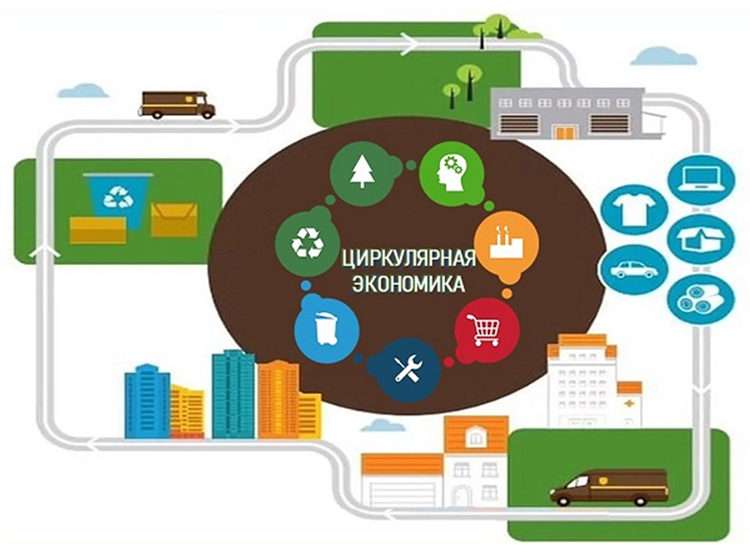
The 2035 National Circular Economy Strategy was enacted via the Resolution of the Council of Ministers No. 393 on May 29, 2024. Its core targets include: (1) reducing GDP energy intensity from 388.1 to 268 kg of raw materials/million rubles; (2) increasing renewable energy share from 7 to 9%; (3) lowering industrial waste generation intensity from 0.49 to 0.4 kg/ rubles; (4) utilizing at least 90% of industrial waste (excl. large-scale mining waste); (5) raising the municipal solid waste (MSW) recycling rate from 31.1 to 90%; (6) improving water use efficiency from 60.7 rubles/m³ in 2021 to 62 rubles/m³.
Environmental protection. A revised Law “On Environmental Protection” entered into force on April 26, 2024. These amendments formalize an ecosystem-based approach, promote a green economy, and incentivize the adoption of resource-saving and low-carbon technologies. Notably, the Law introduces—for the first time—a framework for the economic assessment of ecosystem services. It also establishes more rigorous environmental quality standards, stricter management limits, and updated requirements for economic activities. Furthermore, it expands the rights of citizens and public associations, granting them greater agency in decision-making processes.
International cooperation. The following meetings can be noted: (1) 15th meeting of the Joint Belarusian-Russian Commission for the Protection and Rational Use of Transboundary Water Bodies to sum up the work of the working groups in the basins of the Western Dvina and Dnieper Rivers in 2023 and identify main directions and prospects for further cooperation (May 30-31, Moscow); (2) 7th joint meeting of the Boards of the Ministry of Natural Resources and Environmental Protection of the Republic of Belarus and the Ministry of Natural Resources and Environment of the Russian Federation. The agenda featured management of transboundary reservoirs, strategies for biodiversity conservation, and joint development of protected natural areas. As a result, the following documents were signed: (1) cooperation program for environmental protection and rational use of natural resources for 2024-2026; (2) roadmap of activities in the border regions until 2030; (3) agreement on scientific and technical cooperation of the Republican Research Unitary Enterprise “Bel SIC “Ecology” and Federal State Budgetary Institution “All-Russian Research Institute of Ecology” (November 22, Belarus).
The Ministries of Belarus and China have signed: (1) a MoU on green and low-carbon development; (2) an agreement to establish a Joint Center for Geological Sciences within the China-SCO framework to held geological research, introduce innovations and promote cooperation in geosciences and exploration (August 23, Minsk).
Moldova
Water management. New water monitoring regulations have been approved to mitigate flooding and pollution risks. These regulations establish formal procedures for creating and updating hydrographic basin management plans. Key measures include: mandatory inspections for hydraulic facilities built before 1991, maintaining a water level register for reservoirs and ponds, establishing unified rules for siting pumping stations and water intakes, defining operational protocols for management bodies, and standardizing data entry into the “State Water Cadaster” automated information system.
Thirteen of Gagauzia’s 18 reservoirs are in a state of disrepair. Specifically, the structures in Kotovskoye, Dezginzha, and Beshalma are considered hazardous due to advanced erosion and failing control gates. Authorities have ordered operators to carry out immediate repairs and establish flood-prevention protocols to protect downstream communities. In Gagauzia, 13 of the 18 reservoirs are in poor condition.
The Center Regional Development Agency and French SADE Compagnie Générale de Travaux d'Hydraulique signed an agreement to construct a Chișinău-Strășeni-Călărași water pipeline (50 km) and a pumping station and reconstruct several reservoirs. The project is supported by the German government and the German Development Bank (KfW) (€22 million, 21 months).
Agriculture. In 2024, Moldova’s agricultural output contracted by 15%, regressing to levels not seen since 2014. The downturn was most severe in the crop sector: rapeseed yields plummeted by 60%, corn by 47%, and sugar beets by 32%. Conversely, animal husbandry emerged as the sole growth area, expanding by 5.7%. This downturn is exacerbated by rural job losses, depopulation, and a lack of modern irrigation systems amidst declining rainfall.
To mitigate the impact of the 2024 summer drought and extreme heat, the Emergency Situations Commission allocated 100 million Moldovan Lei to partially compensate affected farmers. Financial support is available to those who lost at least 60% of their corn harvest or 70% of their wheat harvest. Additionally, eligible farmers can apply for a six-month deferral on loan repayments; lenders are required to process these requests within 30 days of submission.
Energy. In the third quarter of 2024, Moldova saw a record increase in renewable energy capacity: an installed capacity reached 521 MW, which is 11 times more than in 2019 and by 55% higher than in 2023. The main drivers were SPPs (344 MW, almost twice as much as a year earlier) and WPPs (154 MW, +22%). Private investors have installed a total of 138 MW. In summer, the auction was launched for a total capacity of 165 MW generated by wind and solar. Thus, the country is committed to supporting green energy development.
Ecology. The Government of Moldova has approved its Environmental Strategy for 2024–2030, aligning national climate action with EU objectives to curb pollution and mitigate ecological impacts. A cornerstone of the strategy is the commitment to reduce net greenhouse gas emissions by at least 70% by 2030 (compared to 1990 levels). The plan integrates green reforms across seven key sectors: energy, industry, transport, construction, agriculture, tourism, and trade. The strategy also prioritizes environmental education and fosters greater public participation in relevant initiatives.
International cooperation. Moldova and Romania are deepening their agricultural cooperation to address critical irrigation and climate adaptation challenges. In response to extreme weather that has decimated corn and sunflower harvests, the Moldovan government has allocated 100 million MDL in emergency compensation for affected farmers. Central to this partnership is a joint modernization program for irrigation infrastructure, which includes specialized technical training for Moldovan experts in Iași. Additionally, the two nations are coordinating the supply of Romanian diesel fuel and seeds. To streamline EU market entry, the collaboration also focuses on establishing an electronic farmer registry and harmonizing agri-food regulations based on the Romanian institutional model.
Russia
Water management
Latest developments in legislation. Approved legal documents: (1) law No. 166-FZ of 08.07.2024 “On amendments to the Water Code of the Russian Federation” clarifying terms on conclusion of water use agreements with the right holders of land plots or hydraulic facilities located within the boundaries of the coastal strip of water bodies; (2) Order of the Federal Water Resources Agency No. 191 of 23.07.2024 “On approval of the List of documents generated in the course of activity of the Federal Water Resources Agency, territorial bodies and subordinate organizations, indicating the retention periods”; (3) PP RF No. 1459 of 31.10.2024 “On approval of regulations for establishing boundaries of water protection areas and coastal protective zones”.
As part of the national “Ecology” Project, water bodies across 49 provinces were rehabilitated, with total funding of 3.4 billion rubles. Key completed projects include dredging of the Sunzhen reservoir in Chechnya and restoration of Lake Kotokel in Buryatia – a water body linked to Lake Baikal. The federal “Rehabilitation of the Volga” Project works to restore the Volga-Akhtuba floodplain. Additional funding secured in 2023 accelerated the completion of some project sites and facilitated an earlier start implementation of plans in the following year. By the end of 2024, hydraulic facilities will be commissioned in Volgograd and Astrakhan provinces to ensure optimal distribution of water among rivers, channels, lakes, and ilmen.
Agriculture. In 2024, agricultural production declined by 3.2% in comparable prices, primarily due to reduced crop yields. Meanwhile, there was an uptick in animal husbandry, particularly in pig farming, dairy production, and oilseeds production (sunflower, soybeans, and rapeseed).
Despite the downturn in production, agricultural enterprises achieved a 12.7% increase in revenue, reaching 6.25 trillion rubles with an average industry profitability of 18%. Organizations specialized in crop production, animal husbandry, and related services saw income rise by 13.9%, totaling 5.28 trillion rubles. Furthermore, the forestry and timber harvesting sector recorded an even sharper growth rate of 17.6%, with revenues amounting to 306.2 billion rubles.
Energy. The 2024–2029 Electric power industry development program has been approved forecasting a rise in consumption to 1.27 trillion kWh and a demand increase of 24.5 GW. To meet this, the plan mandates the introduction of 15.7 GW of new capacity, broken down by source: thermal (TPP): 7.0 GW; Renewables (RES): 5.0 GW; Nuclear (NPP): 2.7 GW; Hydro (HPP): 1.1 GW. While approximately 5 GW will be decommissioned. The highest growth is expected in the Eastern Unified Energy System (UES) at 5.2% annually. By 2029, capacity shortages are projected in several regions: up to 1.9 GW in the Eastern UES, up to 1.3 GW in the Southwestern part of the Southern UES, and over 1.2 GW in the Southwestern part of the Siberian UES.
Electricity production increased by 2.9% to a record 1,198.3 billion kWh. This growth was supported by the commissioning of approximately 1.7 GW of new generating capacity. Meanwhile, coal production reached 443.5 million tons, with exports accounting for 196.2 million tons and domestic market supplies totaling around 178 million tons.
Over the past five years, the installed capacity of renewable energy has doubled, reaching 6.16 GW by June 2024. This includes 2.6 GW provided by 26 WPPs, 2.2 GW from 70 SPPs, 1.3 GW by 9 small HPPs, and more than 100 MW by biomass, biogas, landfill gas, and geothermal energy. However, the share of green energy in the country’s energy mix remains only 1.12%. The largest projects were implemented by Lukoil (wind plants in the North), Rosatom (wind plants in the South), and RusHydro (cascades of small HPPs).
A key strategic initiative is the introduction of guarantees of origin (GO) certificates, which verify the renewable source of energy. These certificates provide a vital tool for green marketing, investor negotiations, and verified carbon offsetting programs. Looking ahead, the government plans to commission over 6 GW of new RES capacity over the next decade. These projects will be awarded on a competitive basis.
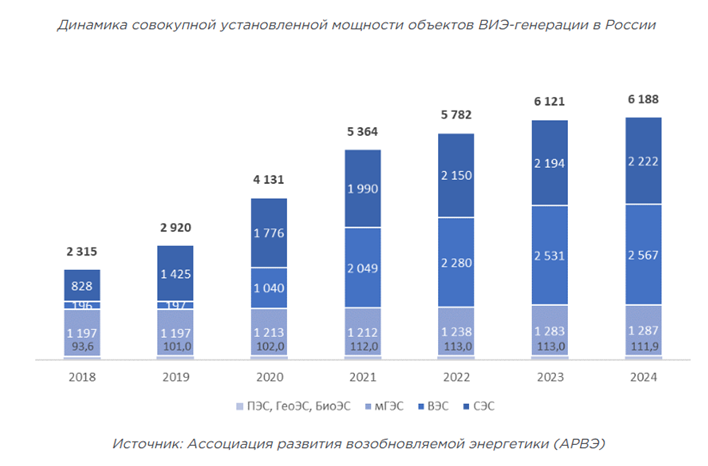
Environmental protection. As part of the National “Ecology” project (2018-2024): (1) 191 unauthorized landfills and 75 hazardous objects of accumulated waste were liquidated; (2) the share of recycled municipal solid waste and processed achieved 36% and 60%, respectively; (3) air emissions were reduced by 20% and a number of cities with high levels of air pollution was decreased by eight. In 2025, the new national “Ecological well-being” project will be launched. It will include six federal focus areas, such as overall cleaning, clean air, water, conservation of forests and biodiversity, etc.
A register of recyclators with confirmed capacities has been introduced; in 2025, manufacturers will be required to recycle 55% of their packaging, and this percentage is to increase to 100% by 2027; new eco-friendly collection rates have been approved and will be increased until 2027; automatic emission control systems have been introduced since 2024; a comprehensive environmental monitoring information system has been developed. This system includes the current status of air and pollution levels, as well as a comprehensive assessment and prediction of the future state of air quality in the context of an experiment involving quotas for emissions of pollutants in the participating cities. It also provides for monitoring and forecasting of forest fire hazard.
International cooperation. A number of meetings of joint commissions on the protection and rational use of transboundary waters was convened, including: XXVII meeting of the Russian-Estonian Commission (October 18, VC); XIV (XXXII) meeting of the Russian-Kazakhstan Commission (November 7, Volgograd); meeting of the Russian-Chinese Commission (November 14, Beijing) and 62nd session of the Russian-Finnish Commission (December 4, VC).
Ukraine
Water sector. Under the Law "On Organizations of Water Users and Facilitation of Irrigation and Drainage," Ukraine’s Cabinet of Ministers has officially designated a list of nationally important canals to ensure transfer of water to the country's arid regions. By formalizing irrigation and drainage systems and protecting modernization investments, the government aims to restore agricultural production on 2 million hectares of land, significantly boosting the yields of high-value crops.
In Odessa province, reconstruction is nearly complete for major networks. Key next steps include the overhaul of main pipeline in the Tashbunar irrigation system and reconstruction of main canals within the Izmail and Nagornyansk systems.
The following events were convened: 1) 1st meeting of the Tisza River Basin Council, where the 2025-2030 Danube RBMP and a Strategic Environmental Assessment procedure were reviewed and 12 proposals to the 2024 Action Plan on protection from harmful effects of waters were submitted for approval to ensure restoration, reconstruction and repair of hydraulic facilities in the Tisza River subbasin; (2) a meeting of the Prut and Siret Rivers Basin Council to discuss the construction of protective dams and major repairs of shore protection and agree on proposals for the 2024 Action Plan on protection from harmful effects of waters (January 18, online); (3) a public discussion on the draft Vistula RBMP, where the results of analysis of the Western Bug and Siana sub-basins and a program of actions, mostly covering the construction and/or reconstruction of sewage treatment plants, were presented (February 29, Lviv).
Agriculture. The Ukrainian Government has approved a National Agriculture and Rural Development Strategy until 2030, along with a corresponding action plan for 2025–2027. This strategic framework is designed to foster a competitive, sustainable, and diversified agricultural sector capable of ensuring the nation’s long-term food security. Key priorities include environmental protection, biodiversity conservation, and climate change mitigation. The strategy also aims to enhance socio-economic resilience and vitality of rural communities.
International aid remains a critical support mechanism for Ukrainian farmers. In 2024, as part of the USAID AGRO program, Ukrainian agricultural producers received aid totaling 1.14 billion UAH. The primary instrument of this support was commodity lending: more than 1 billion UAH was allocated to purchase seeds, fertilizers, and crop protection products, with payments deferred until harvest. This assistance benefited approximately 1,200 farms.
Japan provided: (1) wheeled and tracked excavators, universal backhoe loaders and bulldozers; (2) $230 million for preferential loans to agricultural producers and grant programs for small farms.
It is planned to return more than 500 thousand ha to production in 8 provinces of Ukraine. Specifically, it is planned to survey and, if necessary, clean up land in Kherson (248 thousand ha), Kharkiv (190 thousand ha), Nikolaev (44 thousand ha), Kyiv (9.4 thousand ha), Donetsk (12.8 thousand ha), Dnipropetrovsk (6.6 thousand ha), Chernihiv (2 thousand ha), and Sumy (85 ha) provinces.
Energy. The Government has approved the National Renewable Energy Action Plan until 2030 aiming to achieve 24 GW of renewable energy capacity and a 27% share of renewables in the energy mix. The plan requires commissioning 6.1 GW of onshore wind power, 12.2 GW of solar power, 876 MW of bioenergy, 40 MW of geothermal energy, and 4.7 GW of hydropower. Additionally, the Government has established an extra annual support quota of 110 MW, which is allocated as follows: 11 MW for SPPs, 88 MW for WPPs, and 11 MW for other types of renewable energy. The first projects, selected through pilot auctions, are expected to become operational by 2025.
In Transcarpathia, the first wind turbine of the Ostrovsky Wind Park has been installed in the mountain village of Nizhni Vorota (capacity 4.8 MW, 120-meter tower, and a rotor diameter of 152 m). The project is now undergoing an EIA for its second turbine. The wind park will have a total installed capacity of 80 MW, generating electricity for approx. 50,000 households.
On January 1, a law establishing the State Fund for Decarbonization and Energy Efficiency Transformation came into force. The fund is based on the European “polluter pays” principle. The funds accumulated through the environmental tax, as well as international loans and grants, will be used exclusively to finance energy efficiency programs and measures.
Environment. Moldova and Ukraine signed an agreement to protect the Dniester River that suppies drinking water for about 8 million people (August). The agreement seeks to implement the Espoo Convention, which aims to conduct an environmental impact assessment of major cross-border projects that might harm the environment, and to consult each other. The document provides a legal and procedural framework for environmental impact assessment and management, encouraging regular communication. A joint commission for environmental impact assessment will be established. Ukraine hopes that the agreement will help avoid problematic cases, such as the construction of the Danube-Black Sea Canal.
International cooperation. Several meetings of Ukrainian-Romanian joint working groups were convened in 2024, including of: (1) working group of the Parties on protection from harmful effects of waters, during which water facilities in the Tisza River basin were inspected and information on flood protection measures was exchanged; (2) working group on the Prut and Siret Rivers (Romania) to analyze progress on cooperation in 2023, discuss and agree on a schedule for sampling water from rivers in the border areas and a draft 2025 work program; (3) working group on the Tisza River and its tributaries. Surveys were conducted in the border section in the territory of Romania, where the riverbed was cleaned, and a 2025 Working Program was agreed (October 23-24).
11.6. Middle East
Jordan. The International Committee of the Red Cross has concluded its water program in northern Jordan launched in 2012 to support host communities and Syrian refugees. During the first phase (2013), the program tackled the immediate humanitarian needs of Syrian refugees by providing water, sanitation, shelter and health facilities. In 2014-2022, the focus was on infrastructure development: 20 pumping stations were constructed and approximately 70 km of pipes were replaced, and $30 million were contributed. In 2023, the ICRC focused on sustainability: the Yarmouk Water Company was established, and 50 staff members were trained. Results: access to water has been secured for 1.2 million people; daily allowance increased from 32 to 85 liters; the operational efficiency of water pump stations increased from 22% to 86%; physical losses were reduced from 70% to zero in some cases. Although local companies still face resource and service challenges, the program has demonstrated its effectiveness as both a humanitarian intervention and a foundation for long-term development.
The GCF is supporting a project ($33.2 million) aimed at increasing agricultural water use efficiency and improving climate resilience in four governorates in the Dead Sea Valley. The project aims to reduce the demand for scarce groundwater; install rooftop rainwater harvesting systems on almost 8,000 rural homes and 400 public buildings (ensure a supply to each household of 20,000 liters of water a year to be used both for household purposes and water source for home gardens); build reservoirs to store reclaimed water from wastewater treatment plants during the winter months, and this water will then be distributed to farmers during the summer months; introduce innovative technologies and climate-friendly agriculture.
Palestine. Oxfam published a report entitled “Water War Crimes: How Israel has weaponized water in its military campaign in Gaza”. The report aims to present a detailed overview of the use of water as a weapon in the conflict in Gaza, highlighting violations of international law while supporting the call for an independent investigation into potential violations of international humanitarian law and international human rights law by the Government of Israel and Palestinian armed groups. The key facts reported include: (1) average water consumption in Gaza amounted to 4.74 l/p/d, which represents a 94% reduction in pre-war level and is three times less than the internationally recognized minimum standard of 15 l/p/d; (2) water supply through Israeli Mekorot lines has only reached 22% of Gaza's total supply capacity. Towns such as Khan Younis and Gaza City were completely cut off most of the time; (3) water production in the whole of the Gaza Strip had fallen by 84% due to the destruction of water infrastructure and restrictions on the entry of fuel, electricity and spare parts (by May 2024); (4) 88% of wells, 70% of all wastewater pumps, and 100% water desalination plants having been damaged or destroyed and taken out of service (by June); (5) two main water quality analysis laboratories were destroyed (November 2023 and March 2024) and the entry of water analysis equipment was restricted. Oxfam concludes that there is a deliberate policy on the part of the Israeli government to attack the water and sanitation infrastructure in the Gaza Strip, describing the situation as a “deadly health catastrophe”.
The Sahara Desert flooded for the first time in decades. A rare downpour has transformed the desert into a scene of blue lagoons nestled between palm trees and sand dunes. The rain also filled lakes that are normally dry, such as one in Iriqui National Park, Morocco’s largest national park.
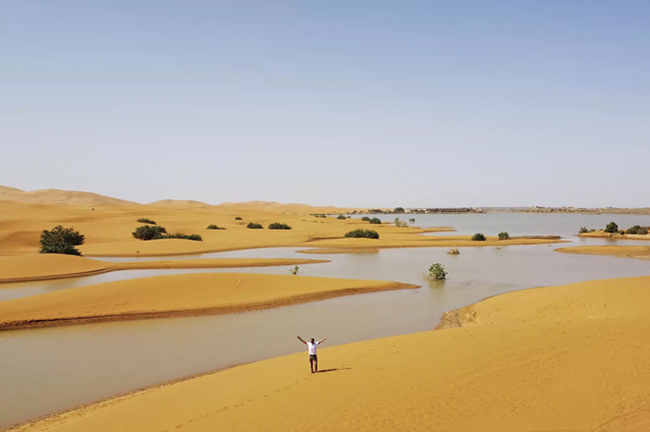
The downpours also brought tragedy, leaving over 20 dead in Morocco and Algeria and devastating farmers’ crops. Meteorologists described the event as an extratropical storm and said that this rare rainfall could change the region’s weather patterns in the coming months and years. As the air holds more moisture, increased evaporation may lead to more frequent storms. In addition, heavy rainfall can replenish the subterranean aquifers of the Sahara serving as an important water source for the inhabitants in the desert.
Development and support
Scientific-Information Center ICWC