
Section 6. United Nations and its specialized agencies
6.2. Security Council
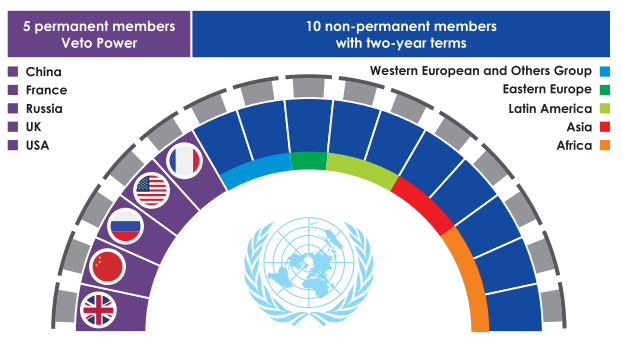
The Security Council (SC) has primary responsibility for the maintenance of international peace and security; all UN members are obliged to follow its decisions. It has 15 members, including 5 permanent members with veto power (Great Britain, China, Russia, USA, France) and 10 non-permanent, elected by the UNGA for two-year terms of five countries each year.
UNSC activity in 2024 on climate and natural resources
SC organized: (1) meeting of the Informal Expert Group on Climate Change, Peace and Security, currently co-chaired by Mozambique and Switzerland, to discuss the implications of climate change on the security situation in West Africa and the Sahel (January 26); (2) high-level open debate on “The impact of climate change and food insecurity on the maintenance of international peace and security” chaired by Guyana to promote enhanced understanding, more coordinated responses, and proactive approaches to addressing the linkages between food insecurity and climate change in a peace and security context (February 13); (3) Arria-formula meeting on “Stepping up Preventive Action: From Environmental Challenges to Opportunities for Peace” to highlight the interaction of environmental degradation and consequences of climate change with economic, social, political, and demographic factors. In this regard, the meeting explored climate-related security risks around the world, which are marked by loss of livelihoods, food and water insecurity, competition over scarce natural resources, human mobility and political and economic instability (July 8).
Source: Security Council
6.3. Secretariat
The Secretariat is one of the main organs of UN. At the head of the United Nations Secretariat is the Secretary-General, appointed by GA upon recommendation of UNSC for a 5-year term. Since January 2022, Antonio Guterres (Portugal) has been serving as the Secretary-General.
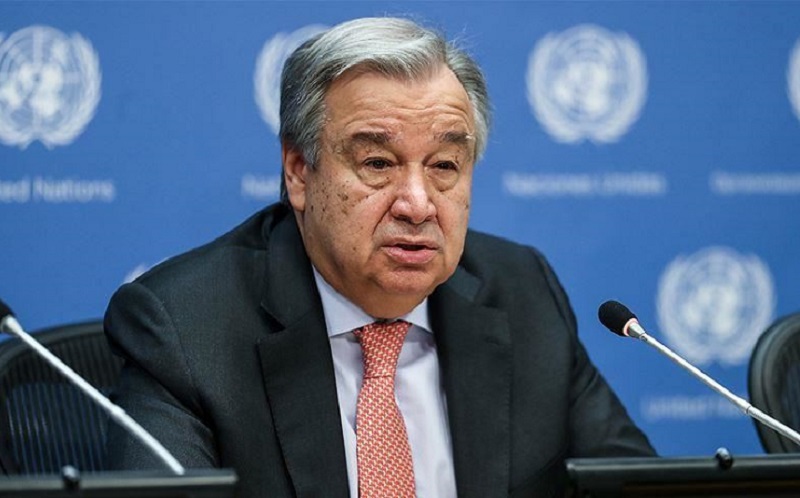
“At every step, our Organization and our personnel will continue to stand in solidarity with the people of the world through these trying times, as we seek to forge a more peaceful, healthy, equal and prosperous future together”
Antonio Guterres, Secretary-General
Each year, the Secretary-General reports on the work of the Organization, including priority areas of the UN's activity and future plans. The 2024 Report highlights the work in the following key areas: (1) sustainable development (UN country teams led by resident coordinators work in 162 countries and territories to help to implement the 2030 Agenda; (2) peace and security (deployed 50 peacekeeping operations, special political missions, and support offices to prevent conflict and support peace building); (3) development in Africa (helped 54 countries to address development challenges and promote sustainable development and the implementation of 2063 Agenda); (4) human rights (facilitated assistance for 60,000 survivors of torture in 92 countries and 12,000+ survivors of contemporary forms of slavery); (5) humanitarian assistance (helped to mobilize $23 billion to assist 128 million people across 74 countries and territories); (6) justice and international law (managed information on 648 multilateral treaties addressing matters of worldwide interest); (7) disarmament (channeled funds to 112 arms control-related projects benefiting 148 Member States); (8) drugs, crime and terrorism (trained 3,000+ criminal justice and counter-terrorism officials from 75 Member States and enhanced membership in the Trafficking in Persons Protocol, with 182 States parties).
Source: UN
6.4. UN Development Program
 The United Nations Development Program (UNDP) is the UN's global development network that promotes positive change and gives countries access to the knowledge, experience and resources that help improve people's lives. It operates in 177 countries and territories.
UNDP activities in the Central Asian countries in 2024
UNDP in Kazakhstan
UNDP is actively supporting Kazakhstan in fulfilling its commitments under the Paris Agreement, with a focus on expansion of green economy and sustainable management of natural resources.
Completed projects: (1) Leveraging Nationally Determined Contributions (2022-2024); (2) Development of Kazakhstan’s 8th National Communication and Preparation of Two (4th and 5th) Biennial Reports (2019-2024); (3) Irrigation and drainage in South Kazakhstan, capacity building and awareness raising (2017-2024); (4) Assistance to the Republic of Kazakhstan in fulfilling international obligations to reduce greenhouse gas emissions by reducing the carbon footprint of electricity suppliers for the leading technology company Bitfury (2019-2024); (5) Regional SDG platform (2021-2024) - a Regional SDG Platform for Central Asia was officially launched; the final meeting of the project Steering Committee was held (June 25); (6) Sustainable forest management (2018-2024); (7) De-risking Renewable Energy Investment (2017-2024) - the results of the project were presented and recommendations were given on further implementation of financial and non-financial support mechanisms and new strategies were identified to be applied in the future (August 13, Astana).
Ongoing projects: (1) Attracting investors in the field of energy efficiency (2021-2026); (2) Supporting the Economic Empowerment of Afghan Women through Education and Training in Kazakhstan and Uzbekistan (2019-2025); Promotion of sustainable food systems (2022-2027); Reintroducing of Turan tiger (2021-2025); 7th Operational Phase of the GEF Small Grants Program (2022-2026).
New projects: (1) Umbrella Program to Support NBSAP Update and the 7th National Reports (2024-2027); (2) Climate Promise Kazakhstan – from pledge to impact (2024-2025); (3) Biodiversity Finance Initiative (2024-2030); (4) Integrating climate change adaptation into Kazakhstan’s strategic planning (2024-2028); (5) Enhancing Urban Resilience to Disaster Risk and Climate Change in Central Asia (2024-2027) to enhance urban resilience to climate-driven risks in Central Asia by utilizing regional collaborative mechanisms and national transformational strategies, fostering sustainable and resilient futures; (6) Promotion of sustainable food systems and improved ecosystems services in Northern Kazakhstan landscape (2024-2027) to test and pilot sustainable land use and ecosystem management approaches and practices at the landscape level for decision-making at the national and regional levels.
Source: open.undp.org/projects, UNDP in Kazakhstan
UNDP in Kyrgyzstan
UNDP helps Kyrgyzstan achieve its national priorities, including in the area of green growth, access to green financing, management and fighting of climate change. In 2024, UNDP Kyrgyzstan implemented project portfolio for $18.5 million.
Completed projects: (1) National SDGs Acceleration Support Platform (2018-2024); (2) Reducing Risks and Vulnerabilities from Glacier Lake Outburst Floods (GLOF) and mudslide in Kyrgyzstan through Strengthening the National Disaster Monitoring system and communities’ adaptative capacity (2022-2024) which introduced a cutting-edge IT module designed for GLOF monitoring; the National Action Plan was developed, national disaster risk reduction capacity was strengthened, and adaptive potential of local communities was enhanced.
Ongoing projects: (1) UN Support for Strengthening Disaster Preparedness (2012-2025); (2) Integrated Community-based Management of High Value Mountain Ecosystems in Southern Kyrgyzstan for Multiple Benefits (2023-2028); (3) Capacity building in Environment (2018-2025); (4) Advancing development of a National Adaptation Plan (NAP) process for medium and long-term adaptation planning and implementation in the Kyrgyz Republic (2020-2025) – a roundtable discussion on the interim results of the project, training for representatives of local media, and a series of interactive training seminars on “Assessment of Climate Risks and Vulnerability” and “Scenario Development” were held (January 16-26).
New projects: (1) Empowering Bishkek Stakeholders for Sustainable Development (2024-2025); (2) Biodiversity Finance Initiative (2024-2030); (3) Umbrella Program to Support NBSAP Update and the 7th National Reports (2024-2027).
The “Climate Box” program was launched for schoolchildren in Bishkek. This program offers students and educators interactive educational materials on climate change to help them understand climate issues and take defined actions to protect the environment.
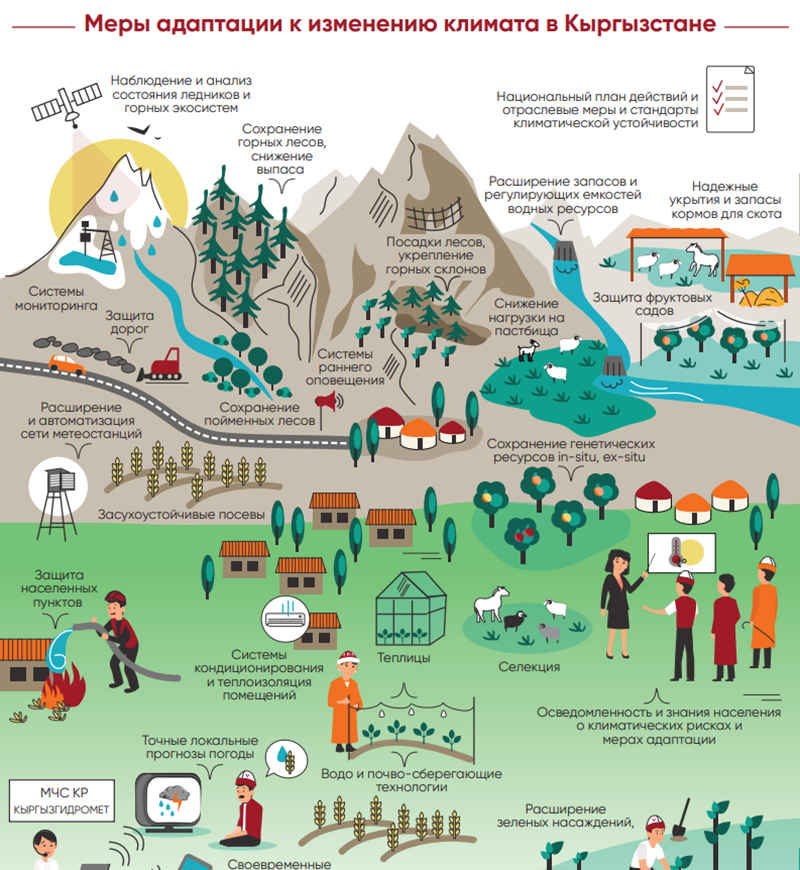
As part of the Climate Change and Resilience in Central Asia project: (1) IT equipment was handed over to the Kyrgyz MES (April 11); (2) a two-day training workshop on “Capacity Building of Key Stakeholders and Decision Makers on Climate Change and the Water-Energy-Food Security and Health Nexus (NEXUS)” was conducted (June 30); (3) comprehensive infographics tailored for both adults and children, as well as a detailed map outlining climate change risks and hotspots were prepared for the Ferghana Valley of the Kyrgyz Republic.
Source: UNDP in Kyrgyzstan, open.undp.org/projects
UNDP in Tajikistan
UNDP as part of its 2023-2026 Country Program for Tajikistan renders assistance to achieve: (1) sustainable, inclusive, and green economic growth; (2) integrated management of climate and environmental risk and (3) people-centered governance and rule of law. In 2024, UNDP's project portfolio in Tajikistan totaled $20.68 million.
Completed projects: (1) Improvement of Water Resources Management in Khatlon Province (2022-2024); (2) Technical Support to Tajikistan Water Sector Reform (2022-2024).
Ongoing projects: (1) Umbrella Program to Support Development of Biodiversity Finance Plans (2023-2027); (2) Conservation and Sustainable Management of High-Value Arid Ecosystems in the Lower Amu Darya Basin (2023-2028); (3) Enabling an Effective National Adaptation Plan in Tajikistan (2020-2025); (4) Green Energy SME Development (2018-2025); (5) An integrated landscape approach to enhancing the climate resilience of small-scale farmers and pastoralists in Tajikistan (2019-2027).
New projects: (1) Preparation of the 1st Biennial Transparency Report and the combined 5th National Communication and 2nd Biennial Transparency Report of the Republic of Tajikistan under Article 13 of the Paris Agreement to the UNFCCC (2024-2028); (2) Support to Water Initiatives of Tajikistan (2024-2025); (3) Umbrella Program to Support NBSAP Update and the 7th National Reports (2024-2027).
Source: open.undp.org/projects
UNDP in Turkmenistan
The focus areas of UNDP's work in Turkmenistan include assistance to better governance and inclusive economic growth, greater country resilience and adaptation to adverse effects of climate change. In 2024, UNDP's project portfolio in Turkmenistan included 35 projects.
Completed projects: (1) Partnering for SDG acceleration phase II (2021-2024); (2) Sustainable Cities in Turkmenistan: Integrated Green Urban Development in Ashgabat and Awaza (2017-2024) the project activity included a number of trainings, including: a training for specialists of the Environmental Control Service laboratories and the velayat environmental protection departments of the Turkmen MEP (May 14-15, Ashgabat); series of events to promote energy efficiency in Turkmenistan with a training seminar “Studying international experience in the implementation of innovative technologies for energy efficiency in the electric power industry” and an International conference on “Prospects for the introduction of green innovative technologies for energy efficiency in the electric power industry of Turkmenistan” (March 13-20, Mary); a practical training aimed to support specialists of Turkmenistan in greenhouse gas inventory, including familiarization with the global platform on the Capacity-building Initiative for Transparency – Global Support Program (April 3-5, Ashgabat).
Ongoing projects: (1) Strengthening national capacity on DRR Seismic Risk Assessment, prevention and respond to potential earthquakes and associated cascading emergencies (2018-2025); (2) Conservation and Sustainable Management of Land Resources and High Value Ecosystems in the Aral Sea Basin for Multiple Benefits (2021-2027) – LDN working group was established to use technical capacities of the Scientific and Public Council on Desertification supported by Tebigi Kuvvat NGO; LDN baseline collection methodologies at the national level were elaborated; workshops were organized on the practical application of the LDN and effective water resource management in irrigated agriculture; (3) Developing a National Adaptation Planning Process in Turkmenistan (2021-2025) – project activities include a roundtable to present a database on priority technologies available for the future implementation of the National Adaptation Plan (NAP) in the country; a joint workshop on “Strengthening Climate Resilience of the Water-energy-food-ecosystem Nexus in Turkmenistan and Central Asia”; a series of workshops for representatives of the private sector of Turkmenistan on the issues of climate risks and adaptation.
New projects: (1) Biodiversity Finance Plan Turkmenistan (2024-2028); (2) Partnering for SDG acceleration, Phase III (2024-2025) – assistance was rendered in the preparation of national reports on the progress of SDG in Turkmenistan, which will serve as a platform for the preparation of subsequent Voluntary National Reviews of Turkmenistan.
Source: UNDP in Turkmenistan, open.undp.org/projects
UNDP in Uzbekistan
The focus areas of UNDP activities in Uzbekistan are strongly aligned with the National Development Strategy of Uzbekistan (2022-2026) and include programs to promote effective democratic governance, achieve inclusive and sustainable growth, sustain a clean environment, take action for the climate, and advocate for gender equality.
Completed projects: (1) Sustainable Development of Mountain Ecosystems (2017-2024); (2) Integrated Conservation Management and Restoration of High-Value Landscapes in Uzbekistan (2023-2024); (3) Development of sector-driven National Adaptation Plan (NAP) to advance medium and long-term climate change adaptation planning in Uzbekistan (2020-2024); (4) Leveraging NDCs to achieve net-zero emissions and climate-resilient development in response to the climate emergency (2022-2024).
Ongoing projects: (1) Supporting an inclusive transition to a “green” economy in the Agri-food sector and development of a “climate-smart” Uzbek Agriculture Knowledge and Innovation System (UAKIS) (2021-2025); (2) Enhancing Multi-Hazard Early Warning System to increase resilience of Uzbekistan communities to climate change-induced hazards (2021-2027) the National Framework for Hydrometeorological and Climatic Services was first developed; (3) Enhancing the resilience of the local population and promoting the green, inclusive development of the most vulnerable communities in the Aral Sea region (2022-2026) – 1,562 people have got access to clean drinking water in project areas; (4) Conservation and sustainable management of lakes, wetlands, and riparian corridors as pillars of a resilient Aral basin landscape supporting sustainable livelihoods (2022-2026); (5) Supporting Self-reliance through Climate-resilient Agriculture in the Aral Sea Region (2023-2025) – a delegation of government officials, UNDP representatives, and key stakeholders from Uzbekistan undertook a technical study tour to Japan to learn from its advanced agricultural technologies, water management practices, and sustainable development initiatives to address the challenges faced by communities in the Aral Sea region (October 8-15, Japan).
New projects: (1) Biodiversity Finance Initiative – Phase II (BIOFIN Uzbekistan) (2024-2030); (2) Building knowledge and skills of local partners and communities to address environmental insecurities through innovative air, land, and water management solutions in the Aral Sea Region (2024-2025); (3) Support to Financing Green Development in Uzbekistan (2024-2026).
As part of the EU-funded regional project “Climate Change and Resilience in Central Asia”, workshops were organized on: (1) transboundary water cooperation: identifying tasks on the way to expanding cooperation using the example of the Fergana Valley (March 26, Fergana); (2) building resilience to climate change through nature-based solutions (April 18-19, Namangan); (3) exchanging experience on and discussing transboundary water management in Central and South Asia ( June 27, Fergana).
As part of the “Climate Education to Promote SDGs and Climate Action” and “Eco-Schools Uzbekistan” projects, a national workshop was launched for teachers (May 2, Green University) to train teachers on the use of the updated “Climate Box” Educational Kit in the educational process. The Climate Box gives access to learning materials in 13 languages and an interactive space for teachers and school education experts.
Source: UNDP in Uzbekistan, open.undp.org/projects
Development and support
Scientific-Information Center ICWC